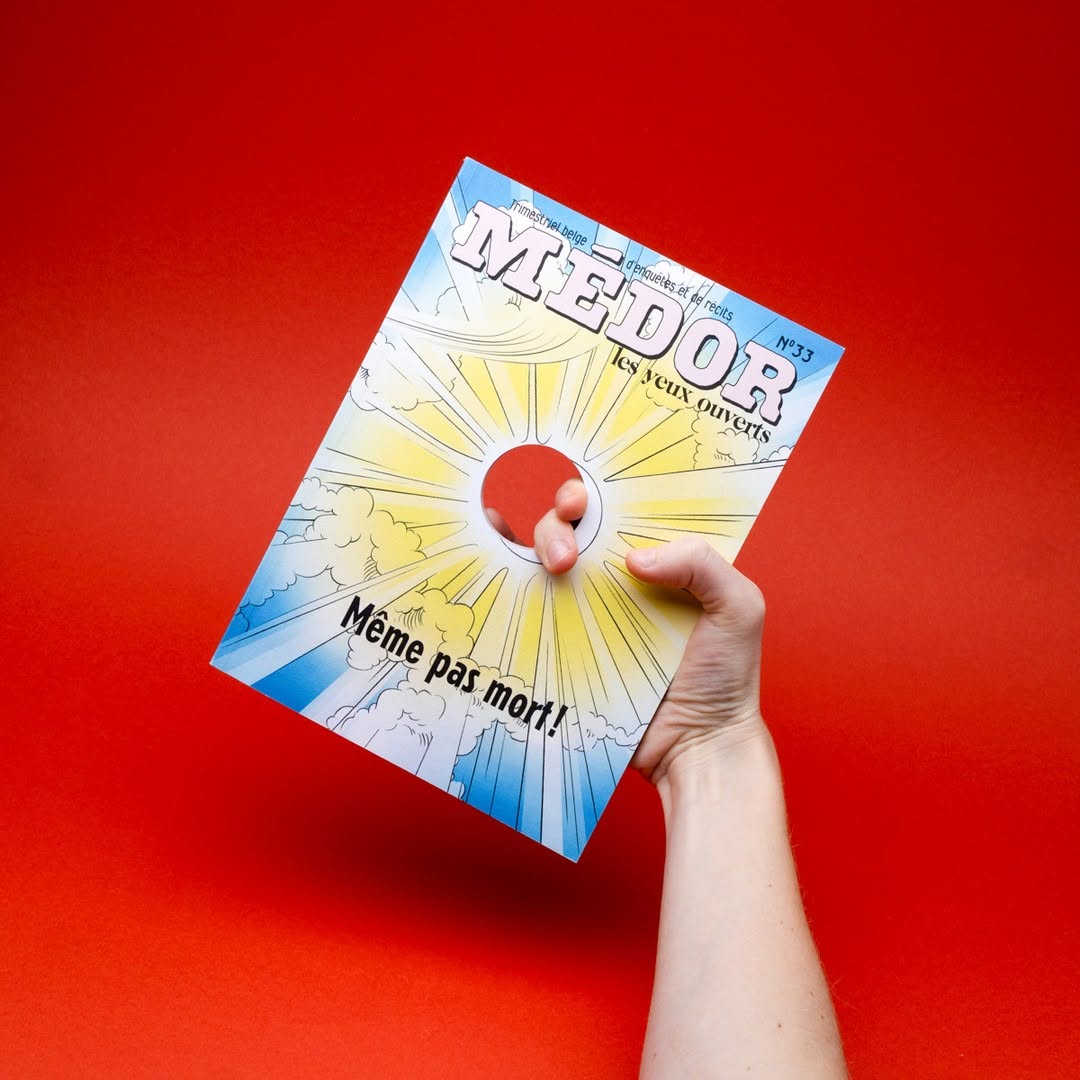
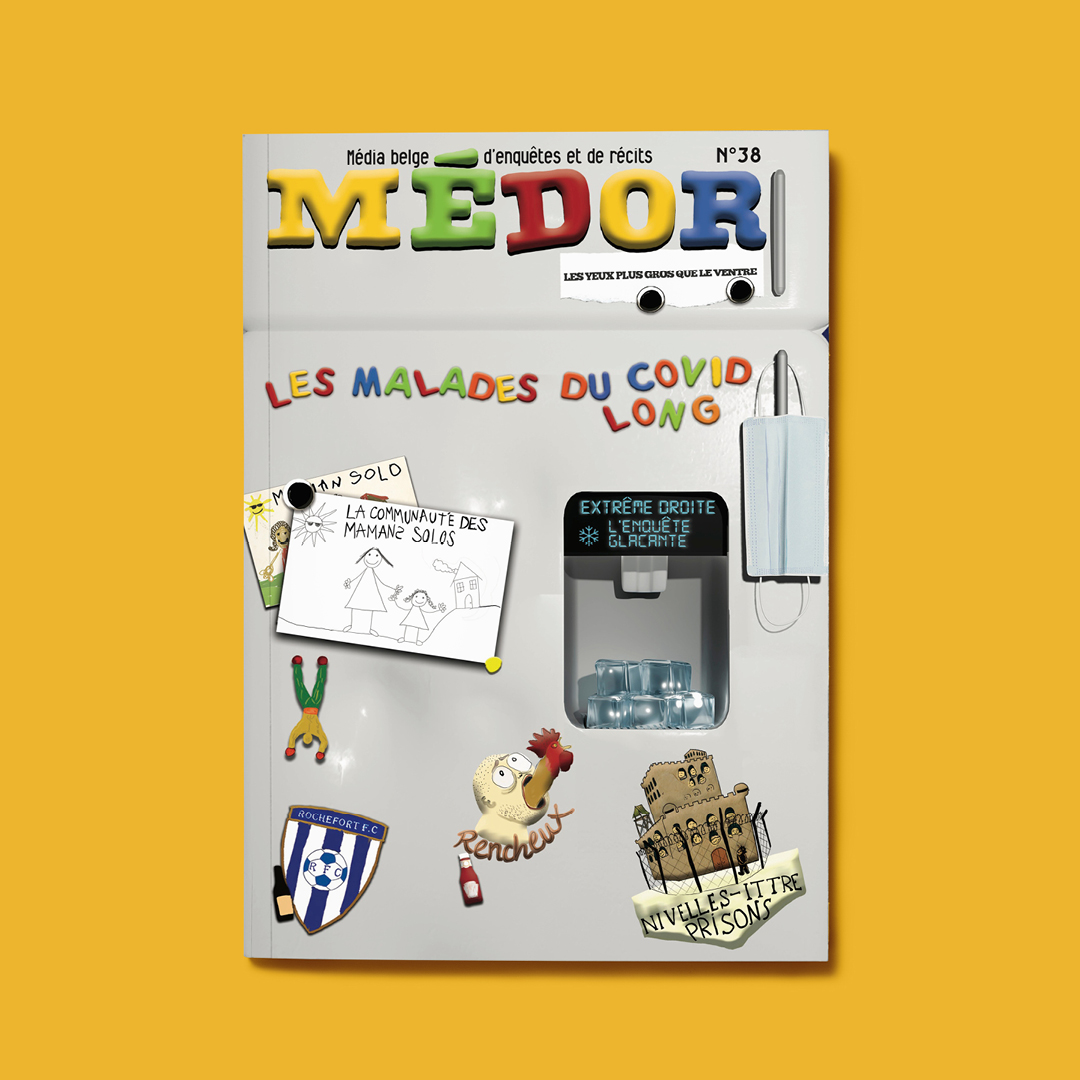
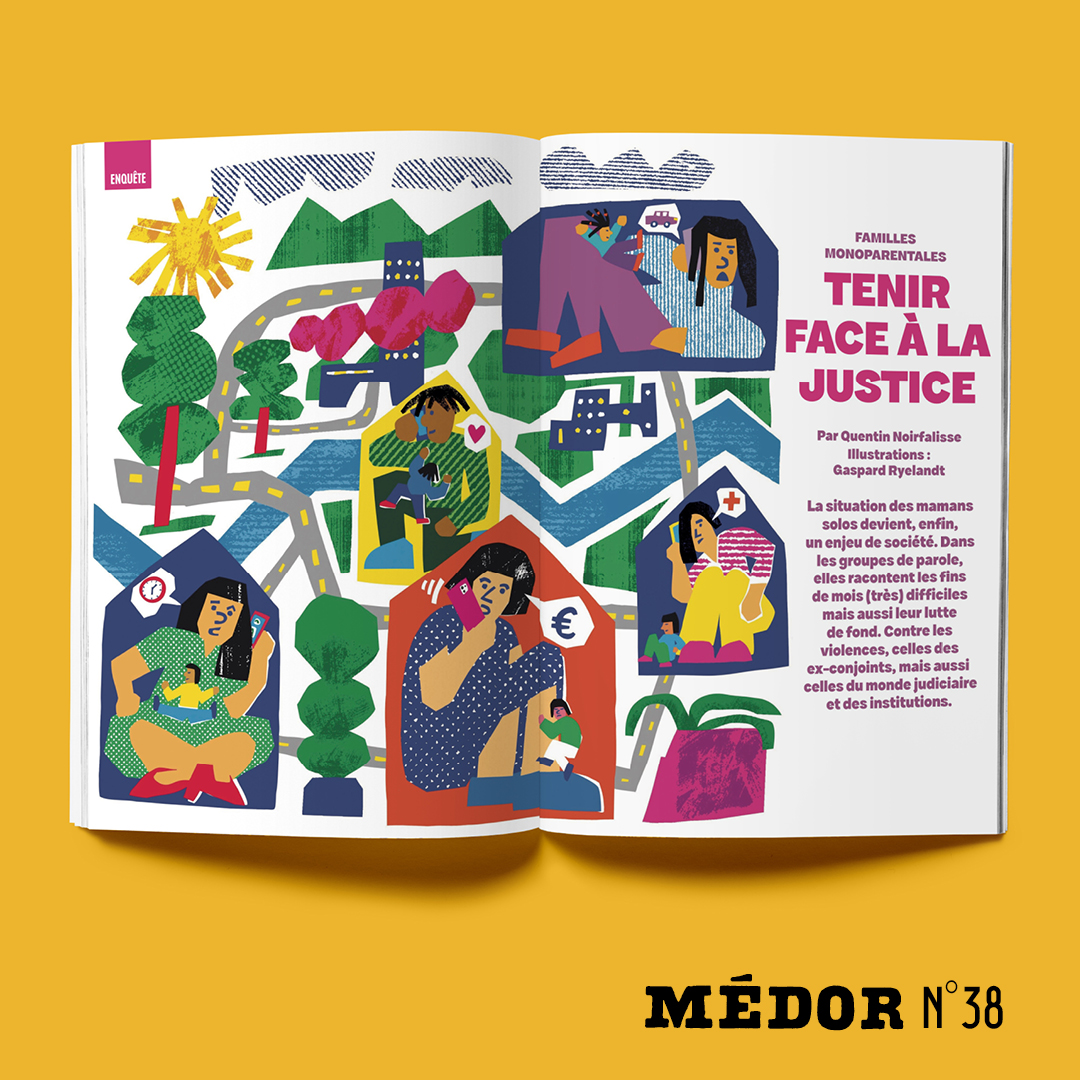
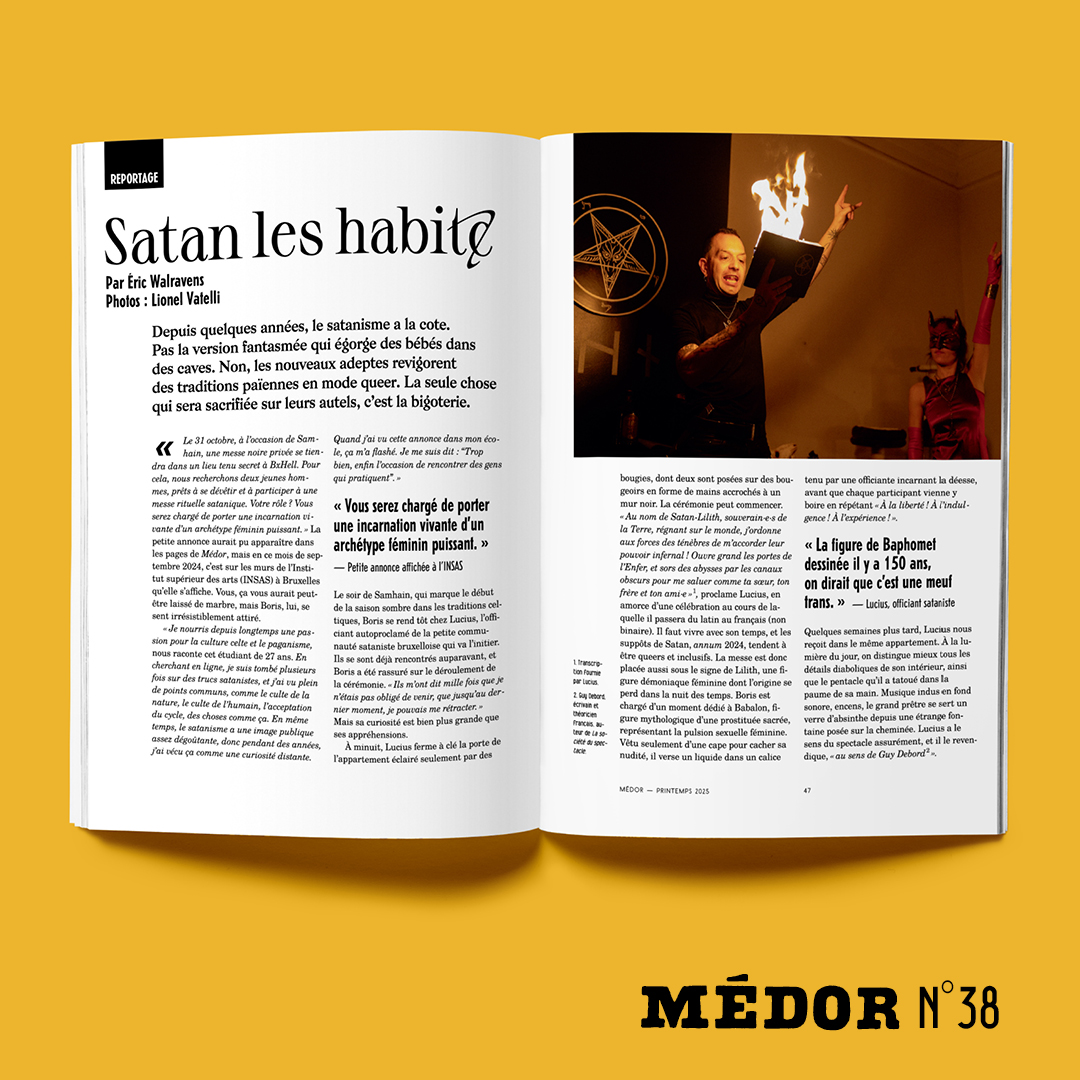
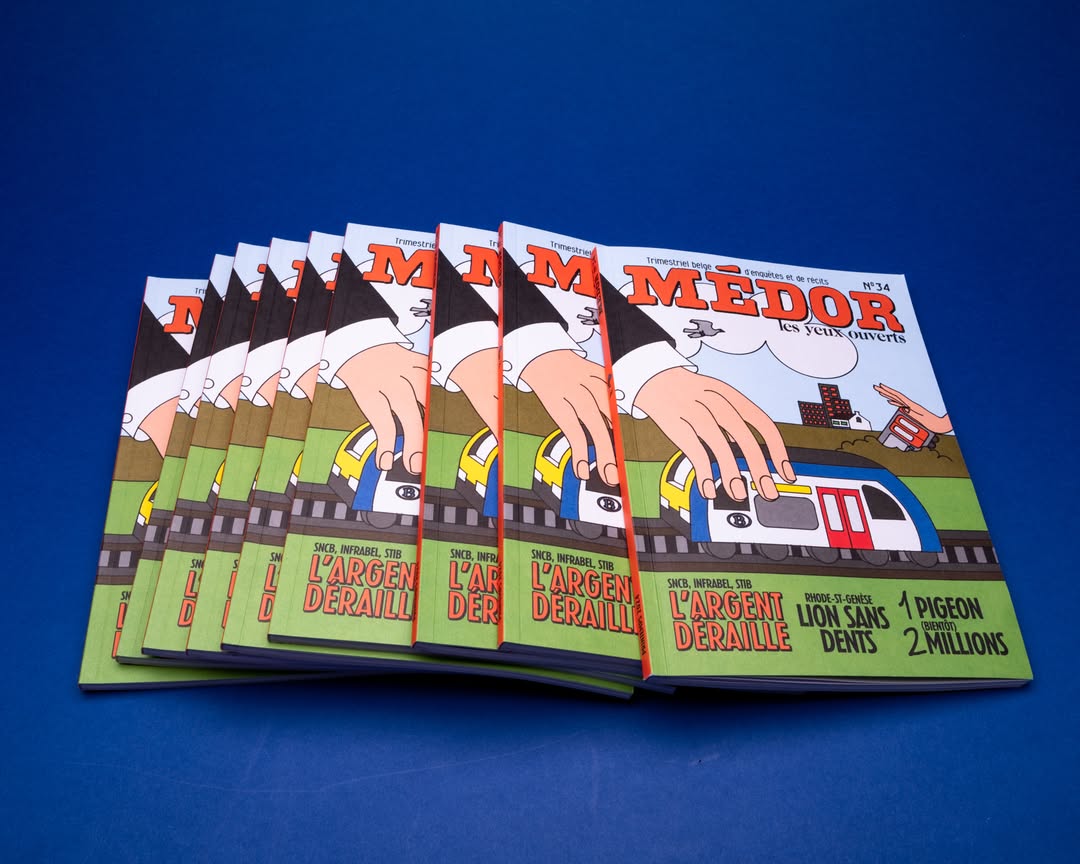
Médor
Médor is an independent Belgian investigative journalism and storytelling publication. In a radio interview given by Quentin Noirfalisse, a member of Médor, to listeners of the program Les autres voix de la presse (Other Voices of the Press)12, he shared the origins of this project, which began in 2012. Journalists, graphic designers, and other media professionals came together, recognizing the crisis that was shaking the sector, and formed a committee to discuss the question: how can we rethink the sector?
They spent three years working together and finally created a cooperative in 2015, which now has more than 2,000 members. The idea was to offer a media outlet focused on Belgium, based on facts and investigation.
Rethinking the sector has led to a desire to move away from traditional tools in favor of free tools and to break free from GAFAM.
As a result, since 2015, the magazine has been using free and open-source tools developed by Open Source Publishing to publish a print version created entirely using web technologies.3
We find this information on their website:
Médor is laid out using “open” technologies that are ubiquitous on the web but rarely (if ever) used by the media: our magazine exists thanks to HTML for its structure and content and CSS (Cascading Style Sheets) for its look. No InDesign is used in the process, but rather an application called HTML2PRINT (HTML for printing).
Inkscape, Gimp, Scribus: these free software programs have replaced their Adobe equivalents, Illustrator and Photoshop, in the layout process.
The use of LibreOffice is encouraged for writing texts (even if some still resist this free invader).
A determined effort has been launched to encourage authors and visual artists to distribute their work under licenses that are more flexible than the very strict copyright law, and Médor encourages publication under Creative Commons. We do not live to put our content behind a paywall. Each author is free to choose their license and define the conditions for reproduction, distribution, and modification of their text, while maintaining a citation requirement and retaining moral rights over their creations.4
The Belgian press is also facing a phenomenon of concentration of power. For example, in French-speaking Belgium, the Rossel group (also present in France with regional media outlets) has just bought out the second largest press group, leading to a quasi-monopolistic situation in terms of information. However, their stance is similar to that of financiers seeking a profitable press rather than a tool for shaping opinion for another business. Furthermore, unlike Bolloré, they are only involved in the press and radio.
This is why Médor is interested in how to produce “robust journalism.” Although the project is financially fragile, the idea was to break away from the traditional system where many media outlets are family-owned. The share price is €20, but whether a cooperative member has a €20 vote or several thousand euros, their vote will have the same weight, so there is no possibility of a takeover.
The Médor newspaper is part of the Collectif Kiosque, a group of independent media outlets specializing in print media, united around the defense of their common values.5
- Les Autres voix de la Presse n°296 - « Médor fête ses 10 ans », octobre 2025. ↩
- Les Autres voix de la Presse n°296 - « Médor fête ses 10 ans », october 2025. ↩
- Blanc Julie, Composer avec les technologies du web Genèses instrumentales collectives pour le développement d’une communauté de pratique de designers graphiques, p.24, 2023. ↩
- https://medor.coop/medor-cest-quoi-cest-qui/des-outils-et-licences-libres/ ↩
- Les Autres voix de la Presse n°296 - « Médor fête ses 10 ans », october 2025. ↩
Toolchain
Writing articles on Libre Office > Mock-ups and illustrations on Inkscape, Scribus et Gimp > html2print > OSPKit > PDF
Infos
Link
Type
Magazine
Designer(s)
OSP (Alexandre Leray)
Publisher
Médor
Printing
CMJN
Pages
128
Technologies
HTML/CSS, OSPkit, HTML2print, GNU/Linux, Git, Ghostscript, Gimp, Inkscape, FontForge et Scribus
Year
2015 - today
Language
French
License
Texts: Creative Commons / Code: ?
Sitography
Médor Boilerplate : https://gitlab.constantvzw.org/medor/medor0