La morale de la Xerox
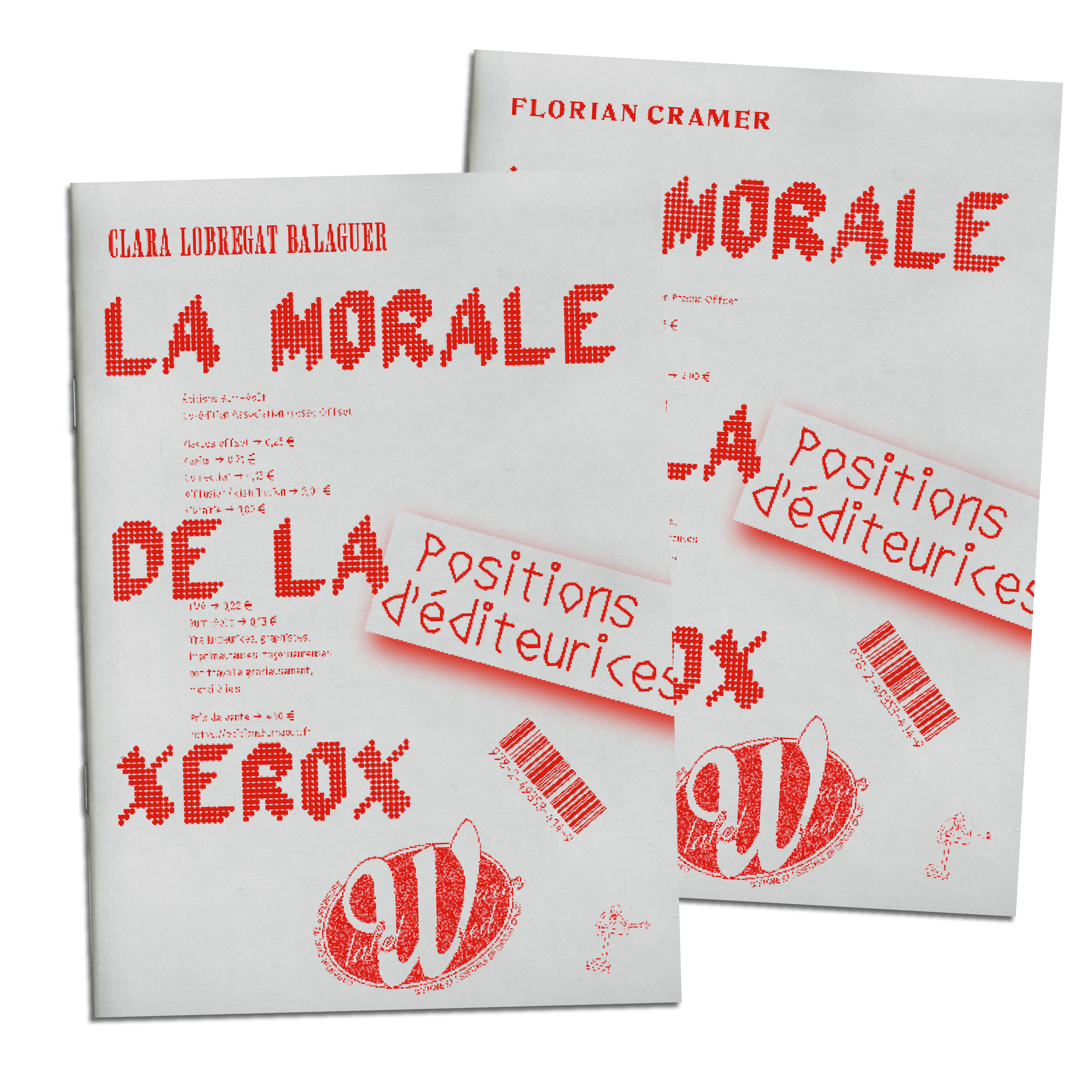
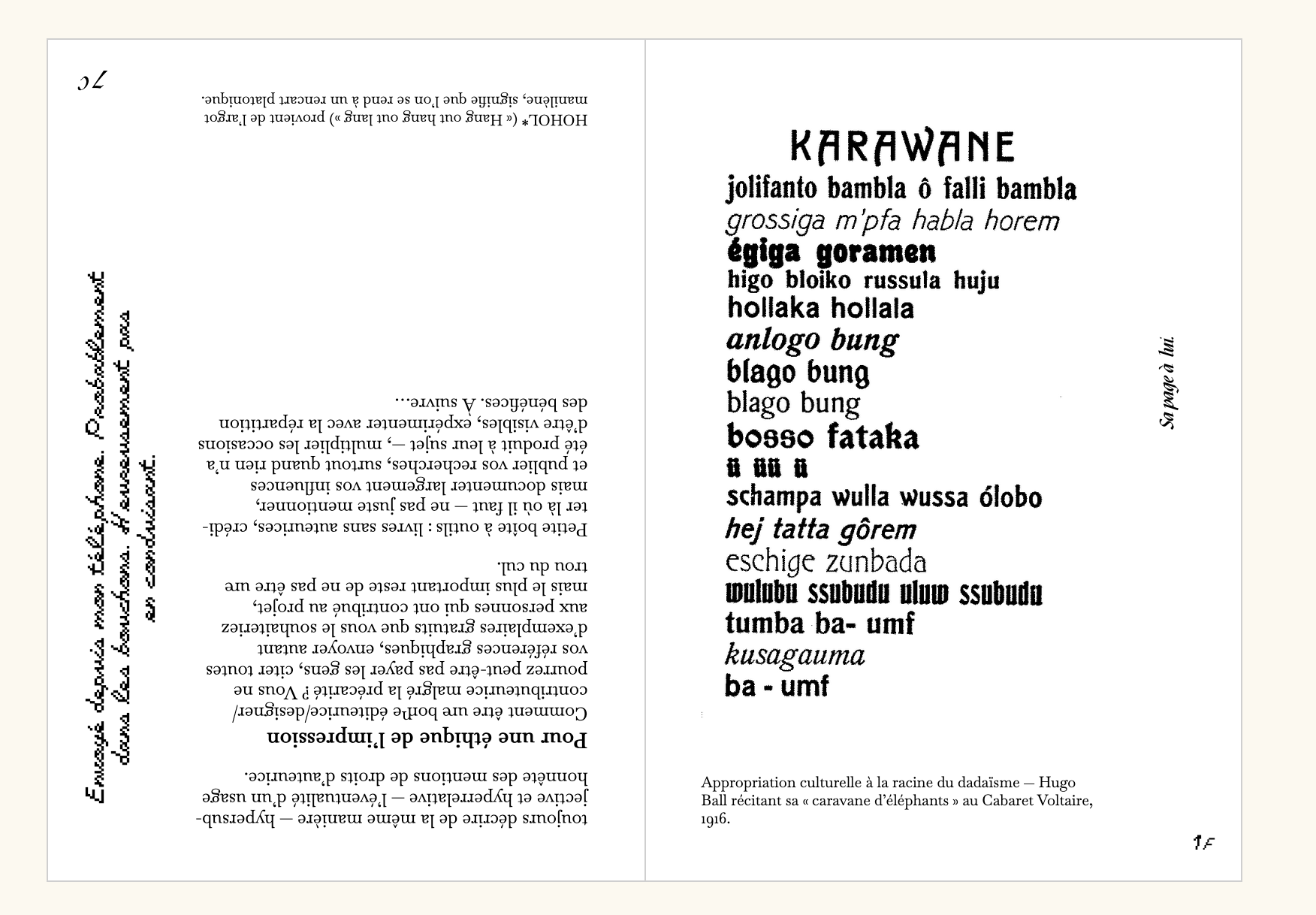
La Morale de la Xerox is a fanzine by Clara Balaguer and Florian Cramer that deals with cultural appropriation. One was born in the West, the other was not. These are two perspectives on the issue. Clara focuses on the problems of access to knowledge in the Philippines, where books, libraries, and bookstores are hard to find, and where it is necessary to “pirate” books in order to read them. On the other side of the book, Florian traces the history of appropriation in art and recounts an episode from the beginning of his career, when an art institution stole his texts in order to publish them without his consent and, of course, without paying him any royalties.1
Burn~Août is a publishing house created in 2020. Its catalog includes traditional publications in the form of essays, but there is also a more experimental collection called “Position d’éditeurices” (Publisher’s Position), in which the writings are critical tools on the production and circulation of printed matter. It is a way of highlighting existing alternative publishing practices. The moral of Xerox is number 7. This project was carried out collaboratively. It was translated, printed, laid out, and bound during seven workshops spread over eight months, open to all.2
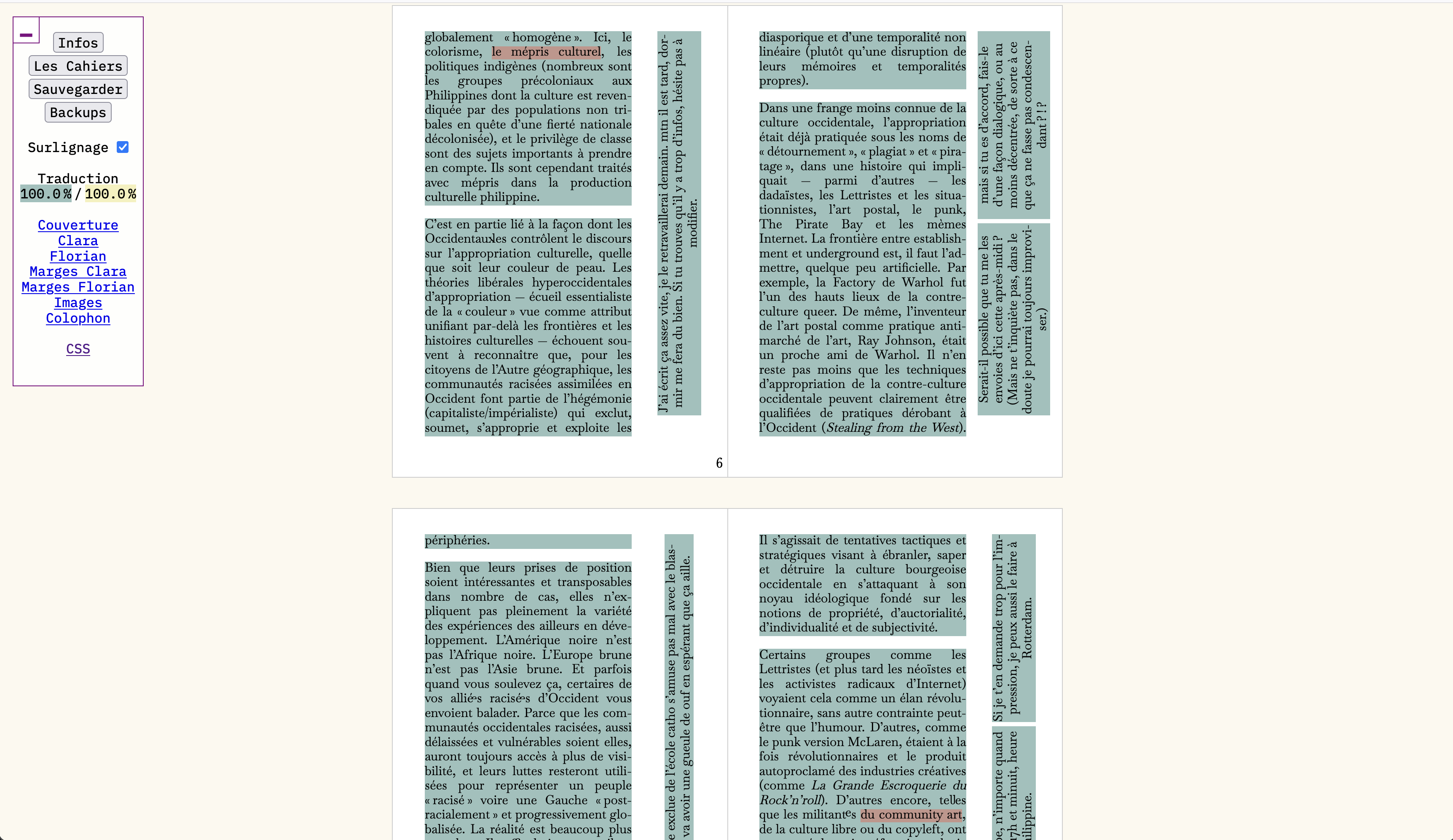
The unique feature of this publication lies in the collaborative translation process. For this project, Yann Trividic developed Patatrad, a free software program dedicated to collective translation.
Each sentence, each word is the result of a discussion held together in a framework devised with the help of the workshop participants. There were as many joyful agreements as there were frictions; the text called for it.3
The aim of the workshops was to successfully translate the entire text collectively, making the discussions that had emerged visible. To do this, Patatrad allows several variants of a translation to exist and brings together the participants’ disagreements. There are therefore as many versions of a text as desired, where everyone can promote their translation on an equal footing with anyone else. This contradicts the usual position of the translator who signs the single version of a text. Patatrad is free software, accessible and adaptable by anyone. Its user manual is online and it is very lightweight.4
In addition, Yann Trividic arrived at each workshop with a new version of the software, allowing participants to test it and provide direct feedback until a version suitable for everyone was achieved.
In the paper version, the translation was fixed on one of the possible combinations. In the digital version, the text remains fluid, allowing traces of the discussions to be preserved.(Et Padatrad ! Des éditions Burn~Août, France Culture, 2024)
- https://piaille.fr/@editionsburnaout/111703169726554287 ↩
- La morale de la xerox, site des éditions Burn~Août. ↩
- La morale de la xerox, site des éditions Burn~Août. ↩
- https://gitlab.com/editionsburnaout/padatrad ↩
Toolchain
Pads (Etherpad) > Padatrad (HTML / CSS / Paged.js) > PDF + Web version
Infos
Type
Edition
Author(s)
Clara Lobregat, Balaguer, Florian Cramer
Designer(s)
Roman Seban & Yann Trividic
Publisher
Éditions Burn~Août et Association Presse Offset
Printing
Riso 1 color
Pages
20
Size
210 × 149 mm
Technologies
HTML, CSS, Paged.js, Padatrad
Year
2024
Language
French