Le champ des possibles
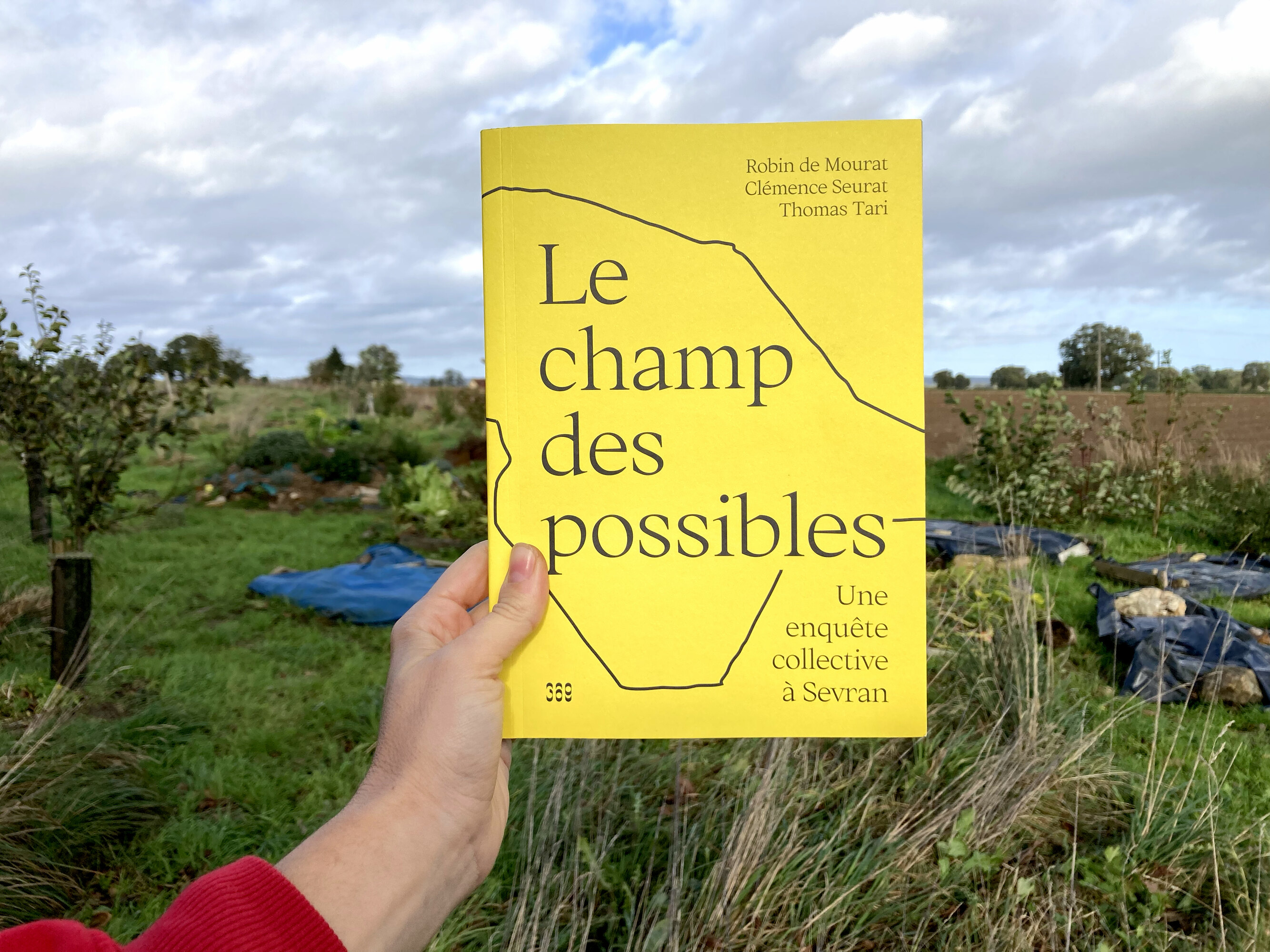
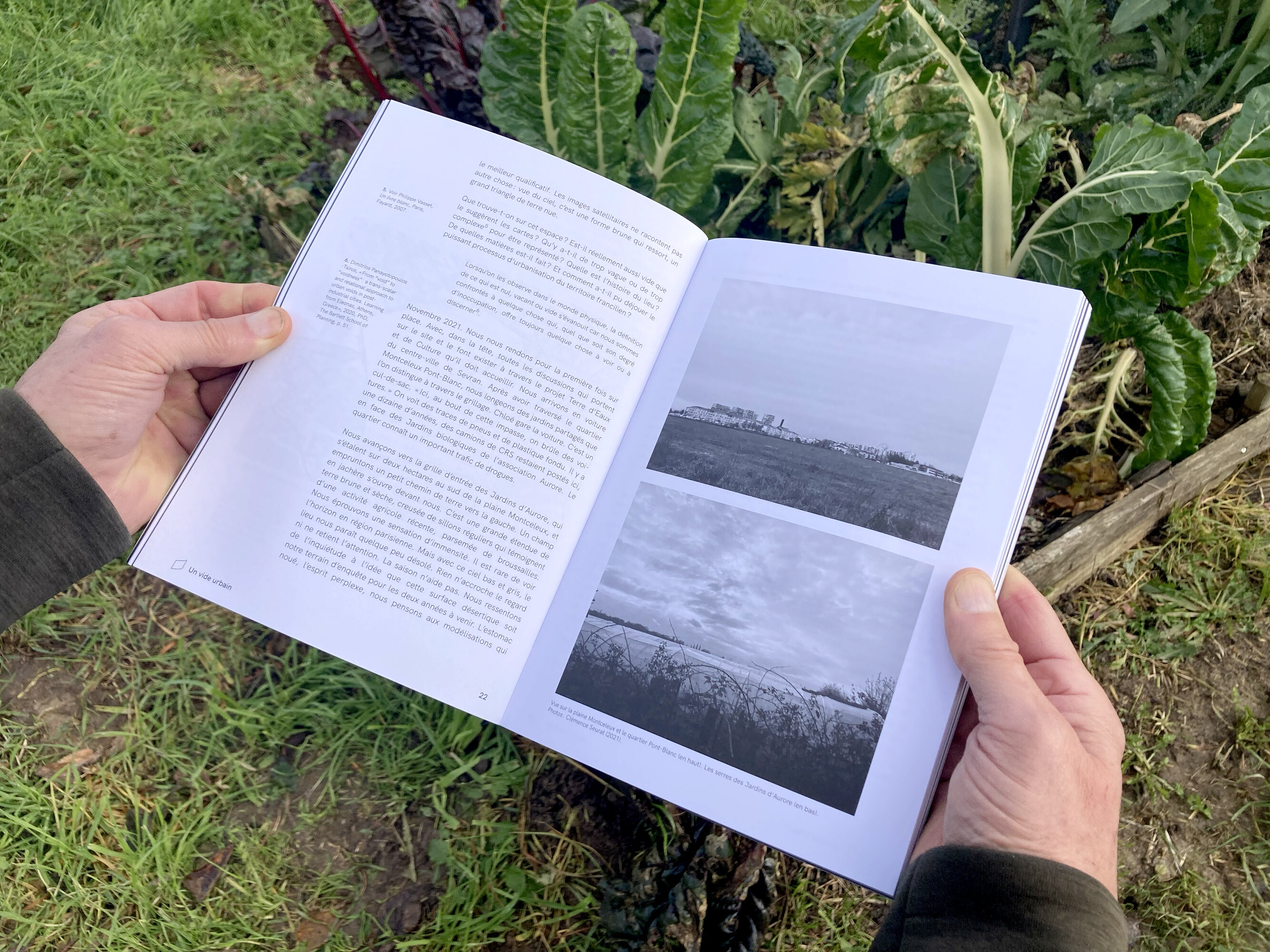
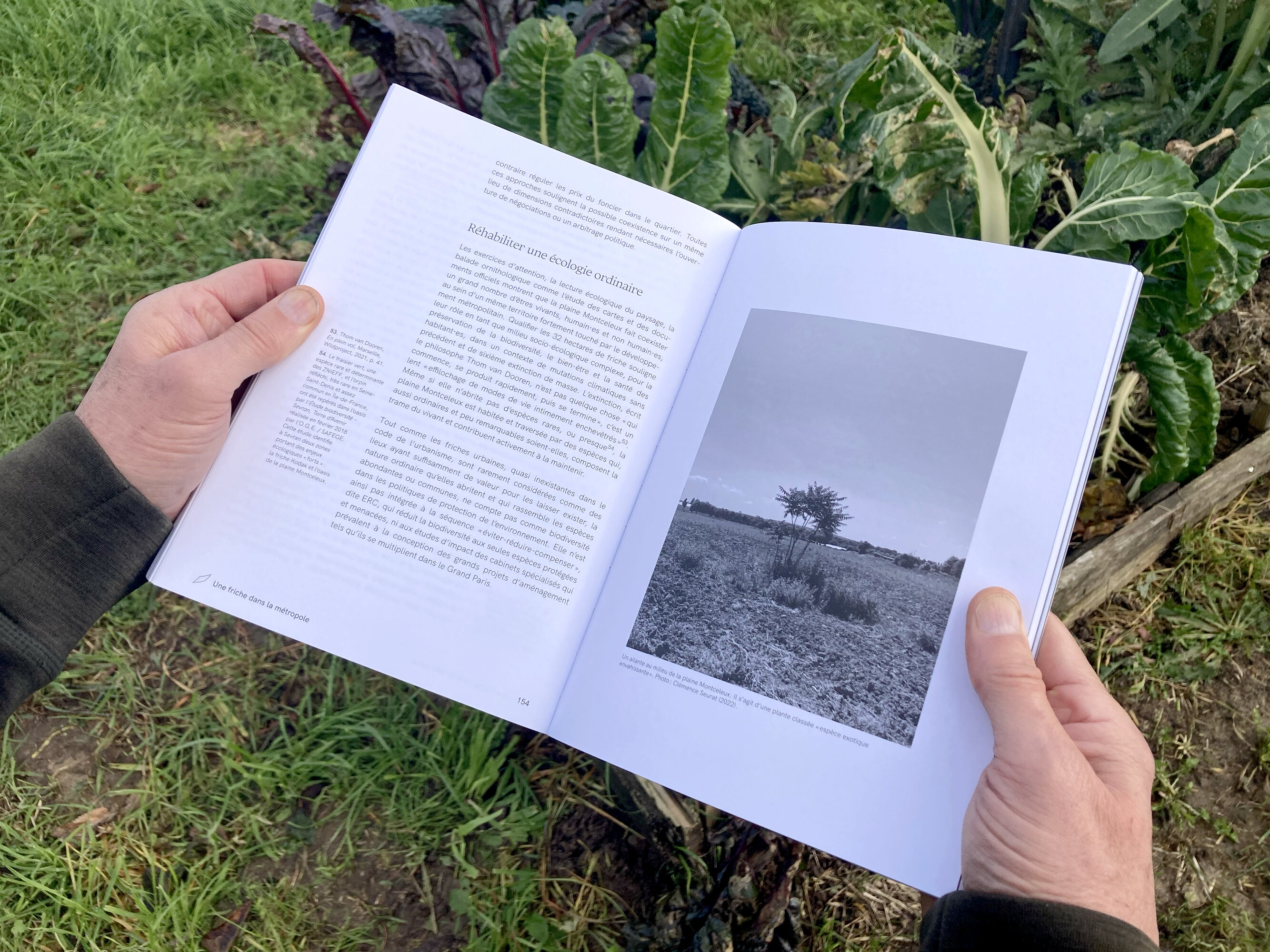
Le champ des possibles. Une enquête collective à Sevran est une publication papier et en ligne. Elle propose une ethnographie d’un territoire de 32 hectares à Sevran en Seine-Saint-Denis. Étudié depuis des disciplines et des pratiques multiples, ce lieu apparemment sans qualités se présente tour à tour comme un vide urbain, une terre de projets, une zone à planifier, un champ de banlieue, une friche dans la métropole, un commun à habiter.(note : https://369editions.com/le-champ-des-possibles/publication/)
Cette publication est le fruit d’une enquête de terrain menée par les auteurs Robin de Mourat, Clémence Seurat et Thomas Tari avec les habitants. Ce projet a été soutenu par le médialab de Sciences PO, la Pourdrerie - Théâtre des Habitants et la fondation Daniel & Nina Carasso.
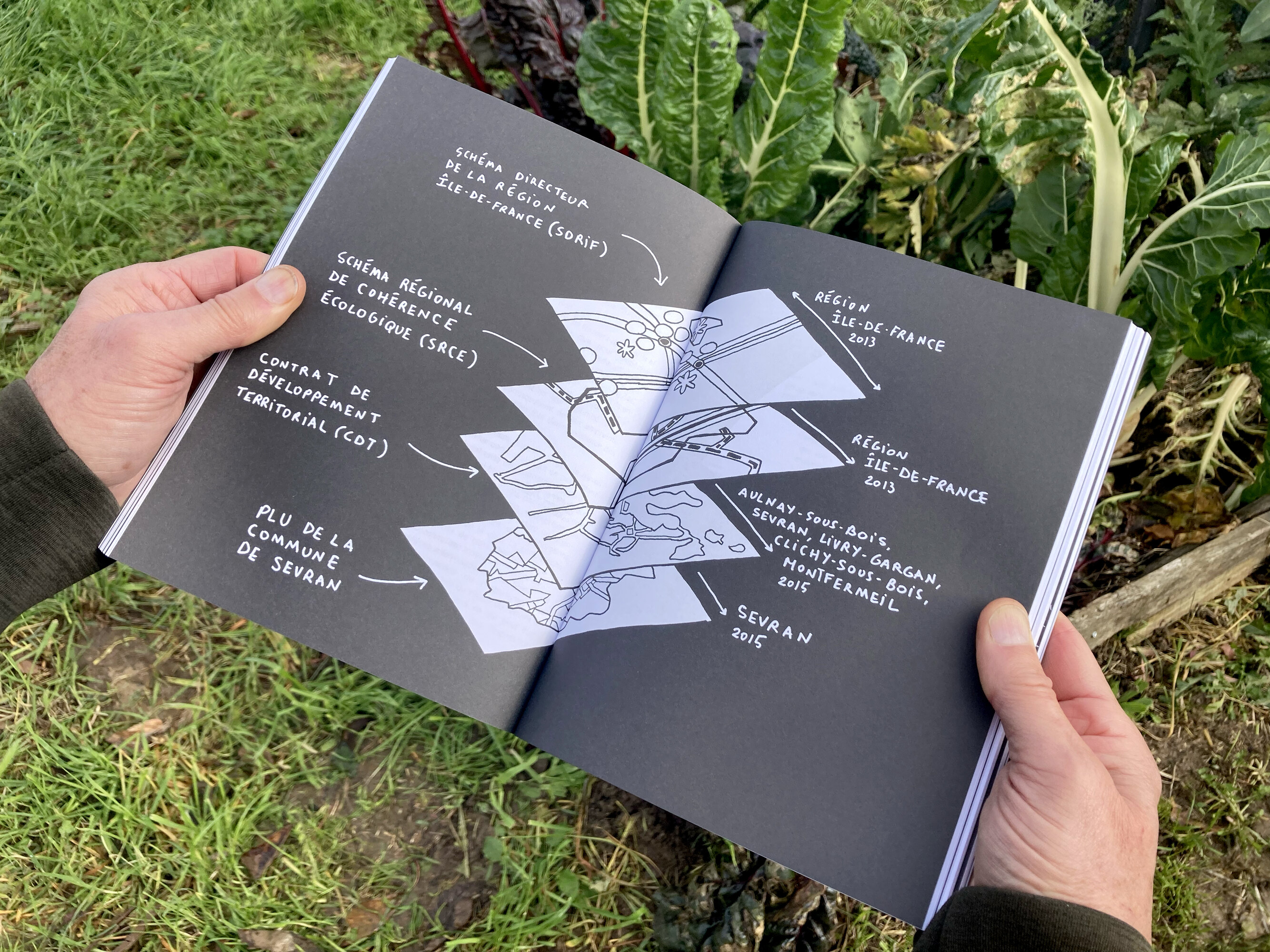
L’objet d’intérêt étant un territoire en devenir, convoitait par des promoteurs, tel que Linkcity qui proposait un complexe de surf. « Aberration écologique, symbole de gentrification et d’exclusion sociale, l’équipement, d’emblée controversé, a finalement été abandonné. » Territoire pris dans le phénomène de métropolisation du Grand Paris. « Les métropoles françaises se construisent selon une logique souvent bien éloignée des préoccupations de leurs habitant·es. Soulignant un manque de transparence, de démocratie, mais l’avis de la population a abouti sur l’abandon du projet »(note : À Sevran, un champs des possibles, Terrestres, 2024 https://www.terrestres.org/2024/03/09/a-sevran-un-champ-de-possibles/)
Pendant deux ans d’enquête et d’échanges, ce territoire a pu être cartographié, exprimant ainsi différentes manières de le voir. Dans le cadre de ce travail un protocole de recherche participatif a pu être mis en place mêlant des méthodes des sciences sociales, des arts et savoirs tacites.
De cette façon, des ateliers ont été organisés et les participants ont pu explorer et pratiquer leur terrain de vie.
Cet ouvrage, à travers les discussions qu’il soulève, ouvre le champs des possibles regards que l’on peut porter sur un territoire. Le prisme sous lequel on l’observe influe, « un vide urbain » un espace a comblé ou une réserve biologique, un espace à préserver ? Tous ces regards ouvrent à des possibilités variés. Cependant, à l’écoute de la création sonore - Contrevoix, on notera que la plupart des habitants tendent globalement vers un espace où la nature aurait une place de premier choix.
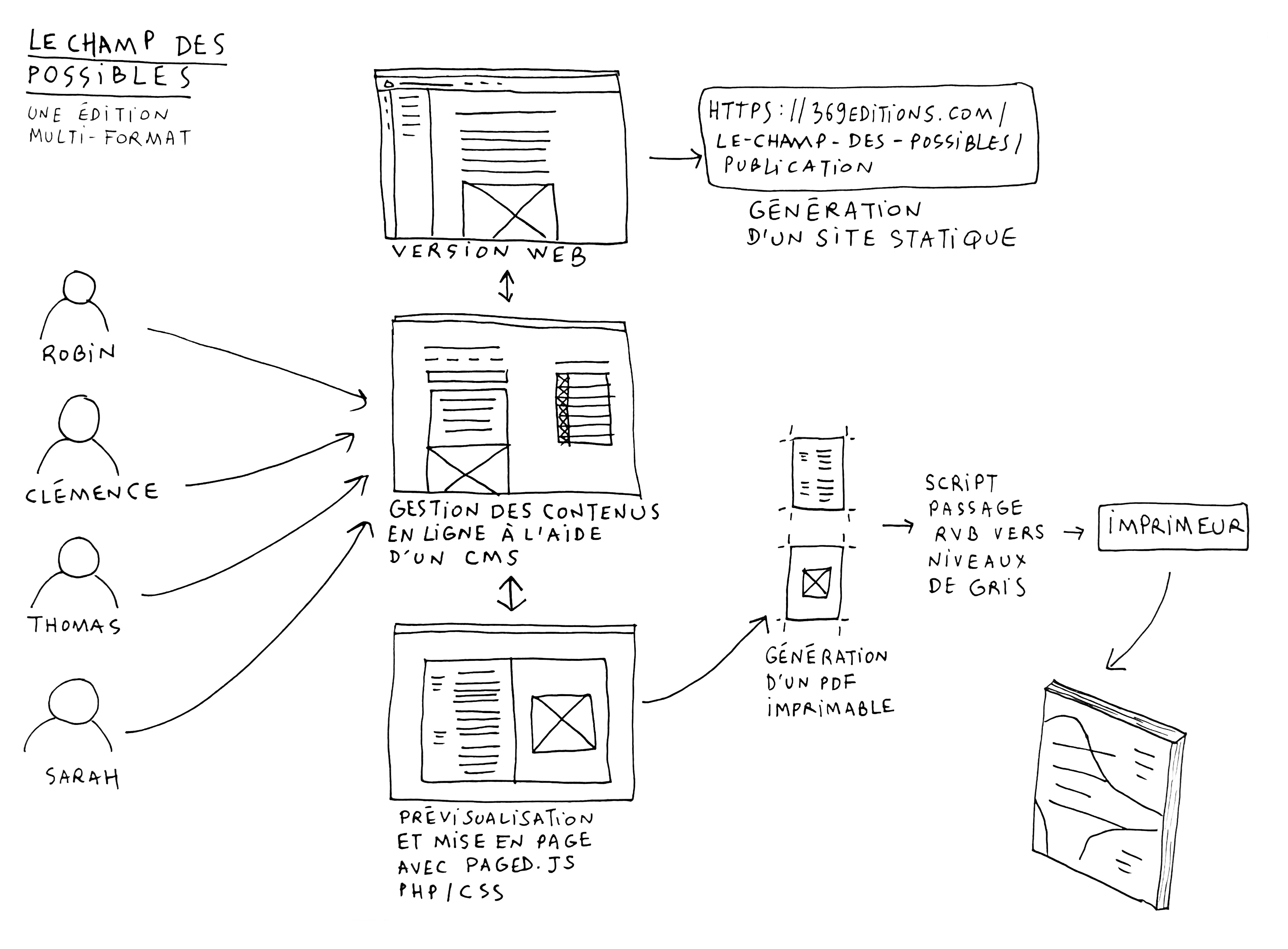
Le modèle éditorial de cet ouvrage a comporté un processus collaboratif d’élaboration et de recueil des contenus, impliquant la mise en place d’une plateforme éditoriale en ligne. La conception graphique a été conçue en webtoprint grâce à Paged.JS.
Toolchain
Texts and images from various sources > Kirby CMS (with specifically developed plugins) > CSS and Paged.js > PDF (Ghostscript script to prepare the PDF for printing) and web page (Static site from Kirby)
Infos
Type
Book
Author(s)
Robin de Mourat, Clémence Seurat, Thomas Tari
Designer(s)
Sarah Garcin
Publisher
369 éditions
Printing
Offset Black and white
Pages
208
Papers
Arena White Rough 3 00g/m², Amber Graphi cs 100 g/m²
Binding
Perfect binding
Size
170 × 240mm
Technologies
Kirby, HTML, CSS, Javascript, Paged.js
Year
2023
Copies
200
Language
French
Printer
Tallinna Raamatutrük i koja OÜ
Authors (Robin de Mourat, Clémence Seurat, Thomas Tari) and collective of Sevran residents
Designer (Sarah Garcin)
Designer (Sarah Garcin)
Designer (Sarah Garcin)
Tallinna Raamatutrükikoja OÜ
Google Docs / Drive
Paper, Pens and Gimp (Illustrations)
Kirby CMS
Paged.js
HTML / PHP / CSS / JS
Chromium
Ghostscript
Printer Pre-press software
Offset Printer
Série d’ateliers sur la friche: Enquête, Photographies, Écriture
Écriture des textes, Sélection d'images
Réalisation des Illustrations
Adding materials into Kirby CMS
Front-end development of the edition's visualisation
Graphic design and layout of the edition
Export PDF in RGB
Conversion of RGB PDF to prepress PDF with black and white colour profile
Printing of the black and white offset edition
Google Drive organised by chapters containing Google Docs, formatted texts
Images classified by chapters
Series of illustrations in jpg format
Collaborative, online interface for content integration
Visualisation of the edition and its layout
Live preview of the layout
Print and web version
Ready to print PDF
Printed book
How to stop using Google services ?
Footnotes issue. In this project, to insert a footnote, it had to be inserted like this (note: this is a footnote), which is quite time-consuming to do during data integration.
What automation processes are possible between content created with word processing software and content formatted for the web?
=> See CMS such as Lodel developed by OpenEdition.
Collecting data
Authors (Robin de Mourat, Clémence Seurat, Thomas Tari) and collective of Sevran residents
Google Docs / Drive
Paper, Pens and Gimp (Illustrations)
Série d’ateliers sur la friche: Enquête, Photographies, Écriture
Écriture des textes, Sélection d'images
Réalisation des Illustrations
Google Drive organised by chapters containing Google Docs, formatted texts
Images classified by chapters
Series of illustrations in jpg format
How to stop using Google services ?
Transforming data
Designer (Sarah Garcin)
Kirby CMS
Adding materials into Kirby CMS
Collaborative, online interface for content integration
Visualisation of the edition and its layout
Footnotes issue. In this project, to insert a footnote, it had to be inserted like this (note: this is a footnote), which is quite time-consuming to do during data integration.
What automation processes are possible between content created with word processing software and content formatted for the web?
=> See CMS such as Lodel developed by OpenEdition.
Layout
Designer (Sarah Garcin)
Paged.js
HTML / PHP / CSS / JS
Front-end development of the edition's visualisation
Graphic design and layout of the edition
Live preview of the layout
Print and web version
Exporting
Designer (Sarah Garcin)
Chromium
Ghostscript
Export PDF in RGB
Conversion of RGB PDF to prepress PDF with black and white colour profile
Ready to print PDF
Printing
Tallinna Raamatutrükikoja OÜ
Printer Pre-press software
Offset Printer
Printing of the black and white offset edition
Printed book