Villa Chiragan
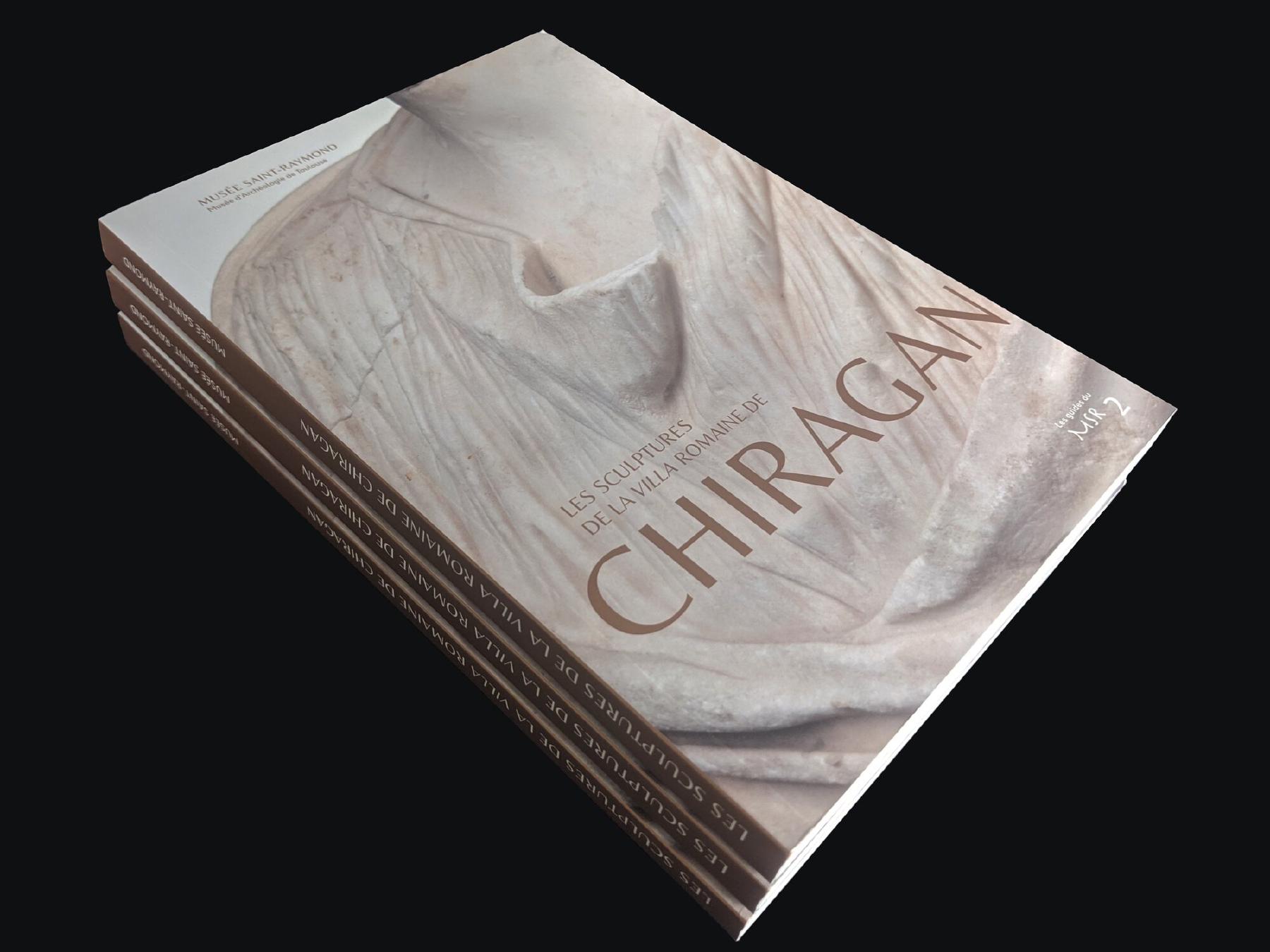
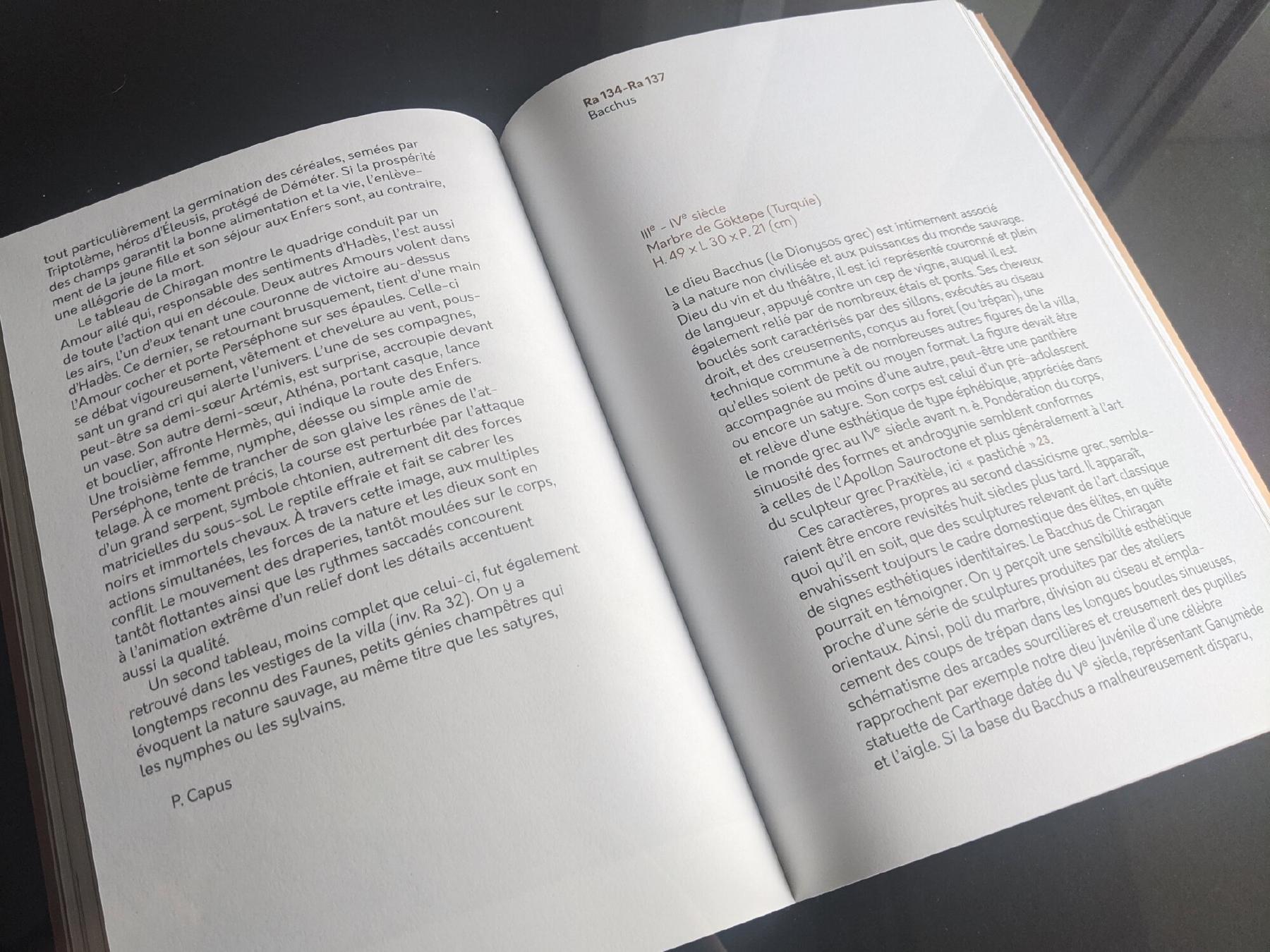
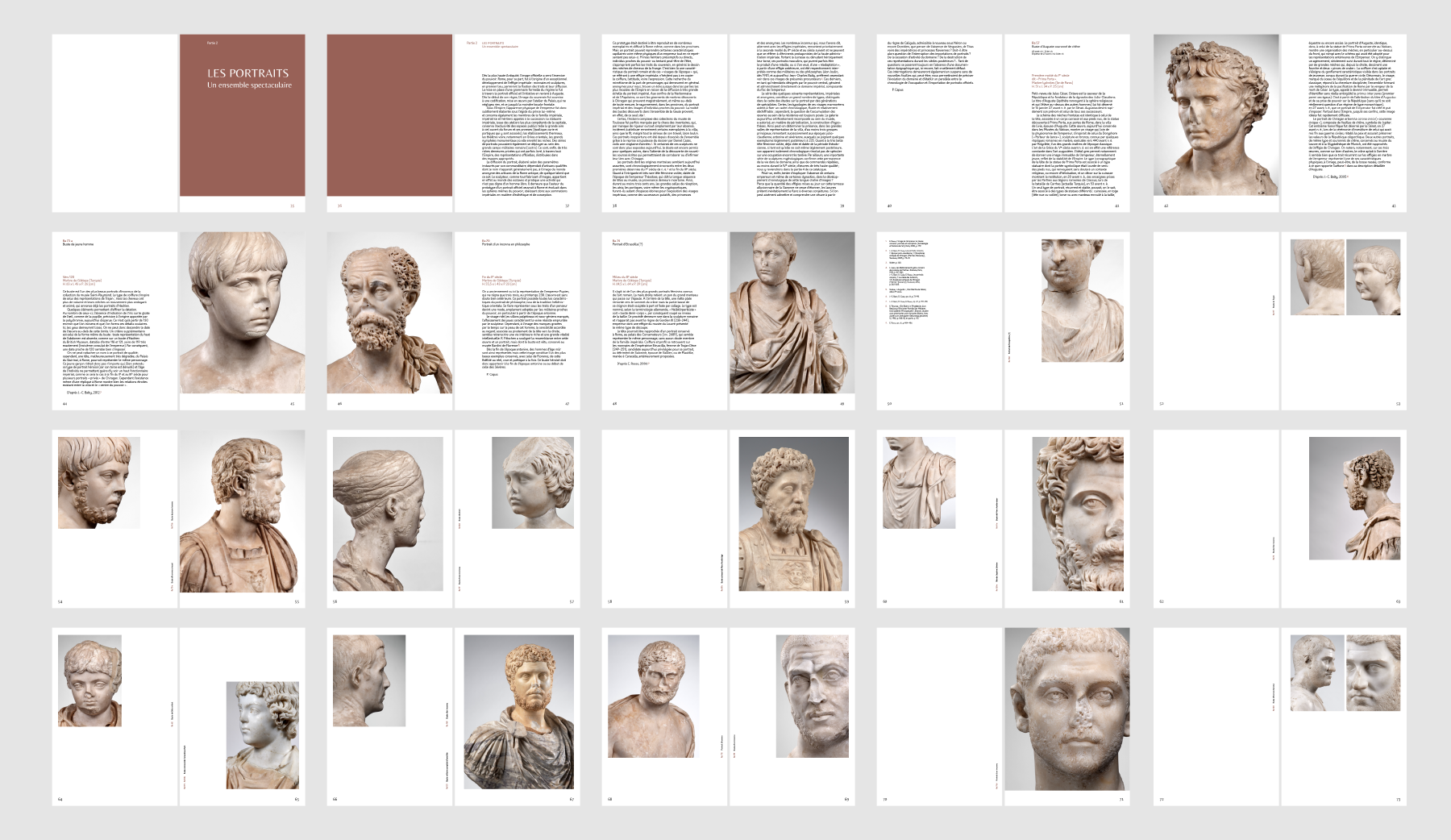
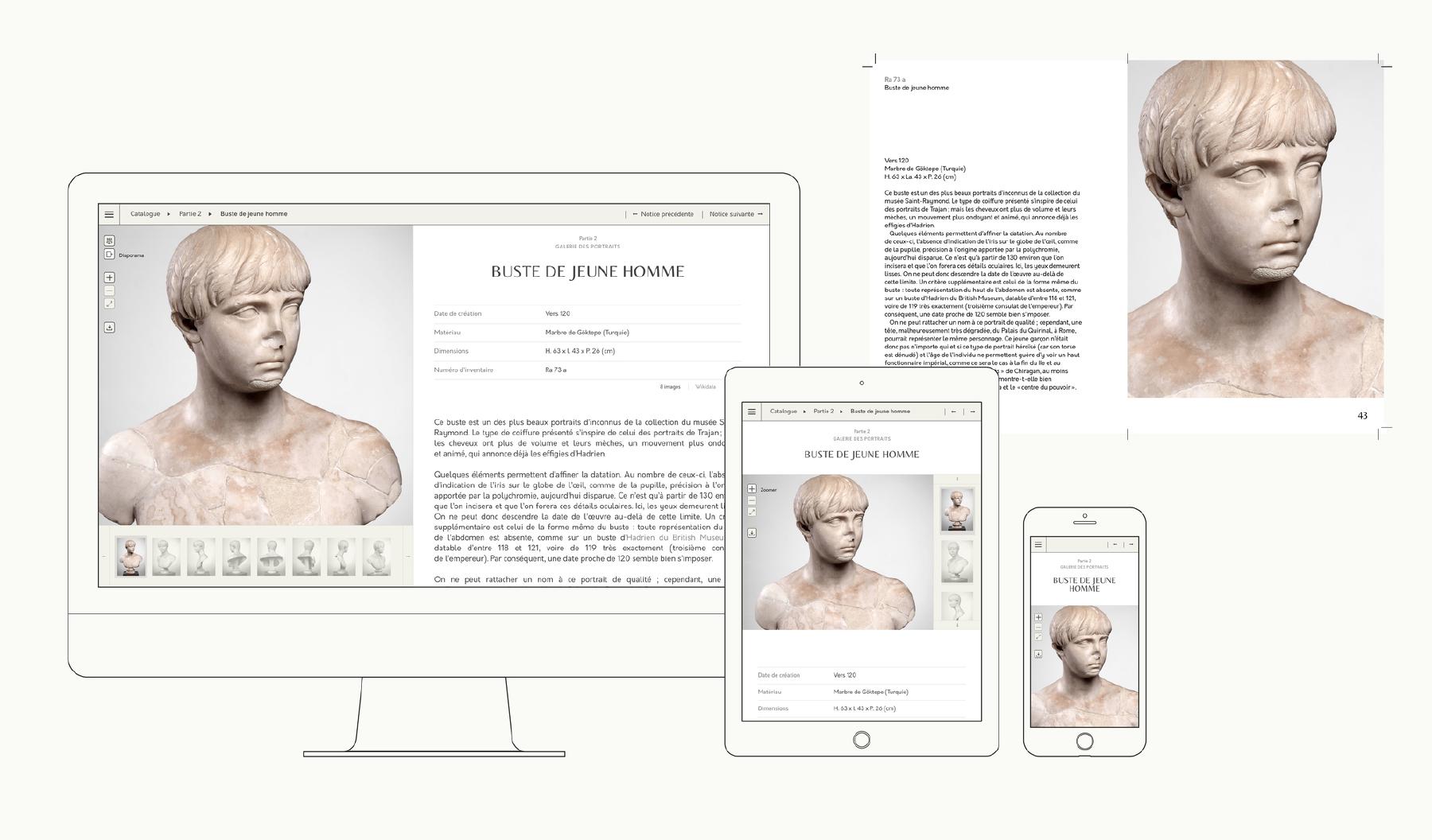
Le catalogue Les sculptures de la villa romaine de Chiragan, développé pour le Musée Saint-Raymond, associe valorisation scientifique et expérimentation éditoriale fondée sur les technologies du web 1. Le musée conserve plus de 700 fragments sculptés découverts à Chiragan (Martres-Tolosane), dont une centaine est exposée. Alors que les recherches antérieures portaient surtout sur des ensembles spécifiques, ce catalogue propose une vision élargie, incluant des œuvres jamais étudiées. Structuré en quatre parties (contexte et restitution de la villa, portraits impériaux et anonymes, sculpture mythologique, grands décors tardifs), il combine textes scientifiques, notices détaillées, bibliographies complètes et images comparatives. Une campagne photographique dédiée offre des visuels en haute définition, parfois manipulables à 360°. 2
Sa chaîne de publication multisupport inspirée du Getty Museum est conçue par Julie Blanc et Antoine Fauchié. Le dispositif permet de produire simultanément une version numérique et une version imprimée à partir d’une source unique, single source publishing.
Cette architecture repose sur les standards ouverts du web (HTML, CSS, JavaScript) et sur un assemblage d’outils open source interopérables : Jekyll pour la génération du site statique, Paged.js pour la mise en page imprimée depuis le navigateur, Git et GitLab pour le versionnage collaboratif, Zotero pour la gestion des références bibliographiques, et Forestry.io comme interface éditoriale graphique destinée à l’équipe muséale. 3
Les contenus, rédigés en Markdown puis convertis en HTML, sont saisis une seule fois et déclinés pour le web et l’impression ; le PDF est généré depuis le navigateur via Paged.js. Les textes et images sont diffusés sous licence Creative Commons BY-SA, conformément à la politique d’open data de la Ville de Toulouse. 4
La structure de ce projet repose sur les principes de l’interopérabilité, la modularité et la multiformité. Grâce à Git, tous les acteurs travaillent sur les mêmes fichiers sources, les modifications automatiquement répercutées sur les deux supports, constituant ainsi un modèle éditorial ouvert, collaboratif et reproductible. 5
- web.2print.org ↩
- Huber Marie, Catalogue numérique Les sculptures de la villa romaine de Chiragan, Plateformes des médiations muséales. ↩
- Blanc Julie, Une chaîne de publication collaborative et multisupport pour le musée Saint-Raymond, 2020. ↩
- Huber Marie, Catalogue numérique Les sculptures de la villa romaine de Chiragan, Plateformes des médiations muséales. ↩
- Blanc Julie, Une chaîne de publication collaborative et multisupport pour le musée Saint-Raymond, 2020. ↩
Infos
Type
Catalogue de musée
Author(s)
Laure Barthet (Directrice), Pascal Capus, Chloé Damay, Emmanuel Rosso, Daniel
Designer(s)
Julie Blanc et Antoine Fauchié
Publisher
Le musée Saint-Raymond, musée d'archéologie de Toulouse
Printing
CMJN + Pantone 876U
Pages
168
Binding
dos carré-collé cousu
Size
165 × 235 mm
Technologies
Jekyll / CSS / Paged.js
Year
2020
Copies
2000
Language
French
Sitography
Christelle Moliné: editorial coordination
Pascal Capus: catalogue copywriting
Antoine Fauchié: toolchain design
Julie Blanc: graphic design and web development
Antoine Fauchié: toolchain design
Julie Blanc: graphic design and web development
Antoine Fauchié: toolchain design
Julie Blanc: graphic design and web development
Ménard Imprimerie, Labège
Markdown
Zotero
Forestry.io
Jekyll
HTML
Git (GitLab)
Jekyll
HTML
CSS
Paged.js
Chrome
Chrome
Netlify
Offset printing CMYK and Pantone (876U)
Writing
Bibliography in Zotero
Text markup
Markdown files converted into structured and organised HTML files: several HTML files are produced for the website and one HTML file is produced for the printed catalogue, using reduced content. The files are converted using the Jekyll static site generator.
CSS and Paged.js layout for the printed version and for the web version
Exporting the PDF in RGB from the browser
Preparing the files for printing => this was done by the printer + photoengraver who created the Pantone images + replaced the CMYK images
Print run of 2,000 copies
Sewn perfect binding
Website hosting on Netlify
Markdown text in Github repository: https://gitlab.com/musee-saint-raymond/villa-chiragan/-/tree/master/en_EN/_contenus
HTML files for the website
An HTML file with all the content for the printed version
A GitLab repository for managing the project with others
Responsive website
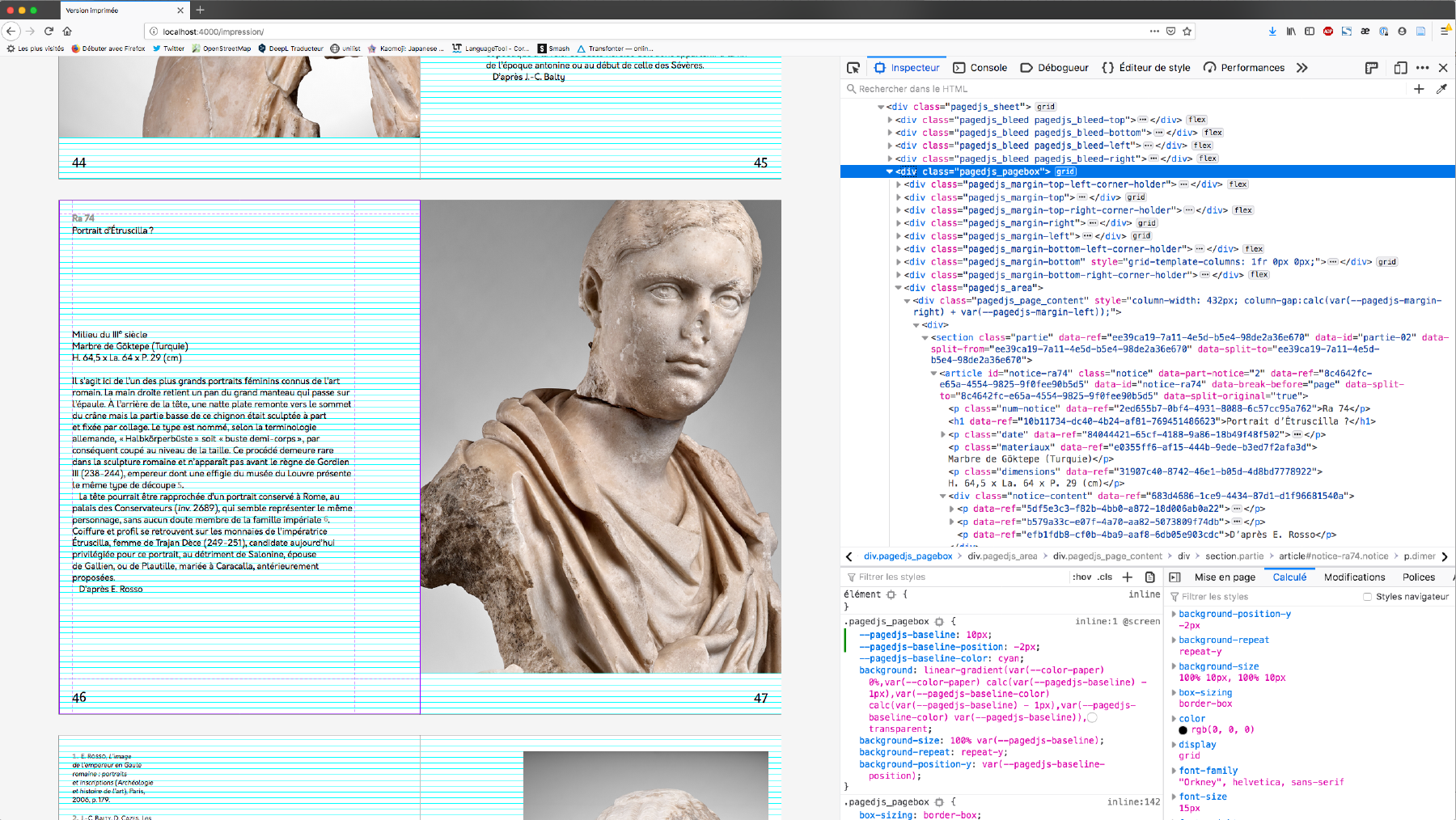
Preview of the printed book in the browser using Paged.js
Responsive website
Ready to Print PDF CMYK + Pantone
Responsive website online
Print edition with different content: more content on the website than in the print edition
Jekyll was chosen because it allowed us to work with Zotero.
Use of scripts:
Jekyll microtypo to improve microtypography
Jekyll scholar: Jekyll plugin to manage the display of bibliographic citations and bibliographies
Better BibTeX: Zotero plugin to generate bibliography exports
Page reorganisation script for full-page images
The author found it incredible to see the website take shape at the same time as he was writing.
Collecting data
Christelle Moliné: editorial coordination
Pascal Capus: catalogue copywriting
Markdown
Zotero
Writing
Bibliography in Zotero
Text markup
Markdown text in Github repository: https://gitlab.com/musee-saint-raymond/villa-chiragan/-/tree/master/en_EN/_contenus
Transforming data
Antoine Fauchié: toolchain design
Julie Blanc: graphic design and web development
Forestry.io
Jekyll
HTML
Git (GitLab)
Markdown files converted into structured and organised HTML files: several HTML files are produced for the website and one HTML file is produced for the printed catalogue, using reduced content. The files are converted using the Jekyll static site generator.
HTML files for the website
An HTML file with all the content for the printed version
A GitLab repository for managing the project with others
Jekyll was chosen because it allowed us to work with Zotero.
Layout
Antoine Fauchié: toolchain design
Julie Blanc: graphic design and web development
Jekyll
HTML
CSS
Paged.js
Chrome
CSS and Paged.js layout for the printed version and for the web version
Responsive website
Preview of the printed book in the browser using Paged.js
Use of scripts:
Jekyll microtypo to improve microtypography
Jekyll scholar: Jekyll plugin to manage the display of bibliographic citations and bibliographies
Better BibTeX: Zotero plugin to generate bibliography exports
Page reorganisation script for full-page images
Exporting
Antoine Fauchié: toolchain design
Julie Blanc: graphic design and web development
Chrome
Exporting the PDF in RGB from the browser
Preparing the files for printing => this was done by the printer + photoengraver who created the Pantone images + replaced the CMYK images
Responsive website
Ready to Print PDF CMYK + Pantone
Printing
Ménard Imprimerie, Labège
Netlify
Offset printing CMYK and Pantone (876U)
Print run of 2,000 copies
Sewn perfect binding
Website hosting on Netlify
Responsive website online
Print edition with different content: more content on the website than in the print edition
The author found it incredible to see the website take shape at the same time as he was writing.