Villa Chiragan
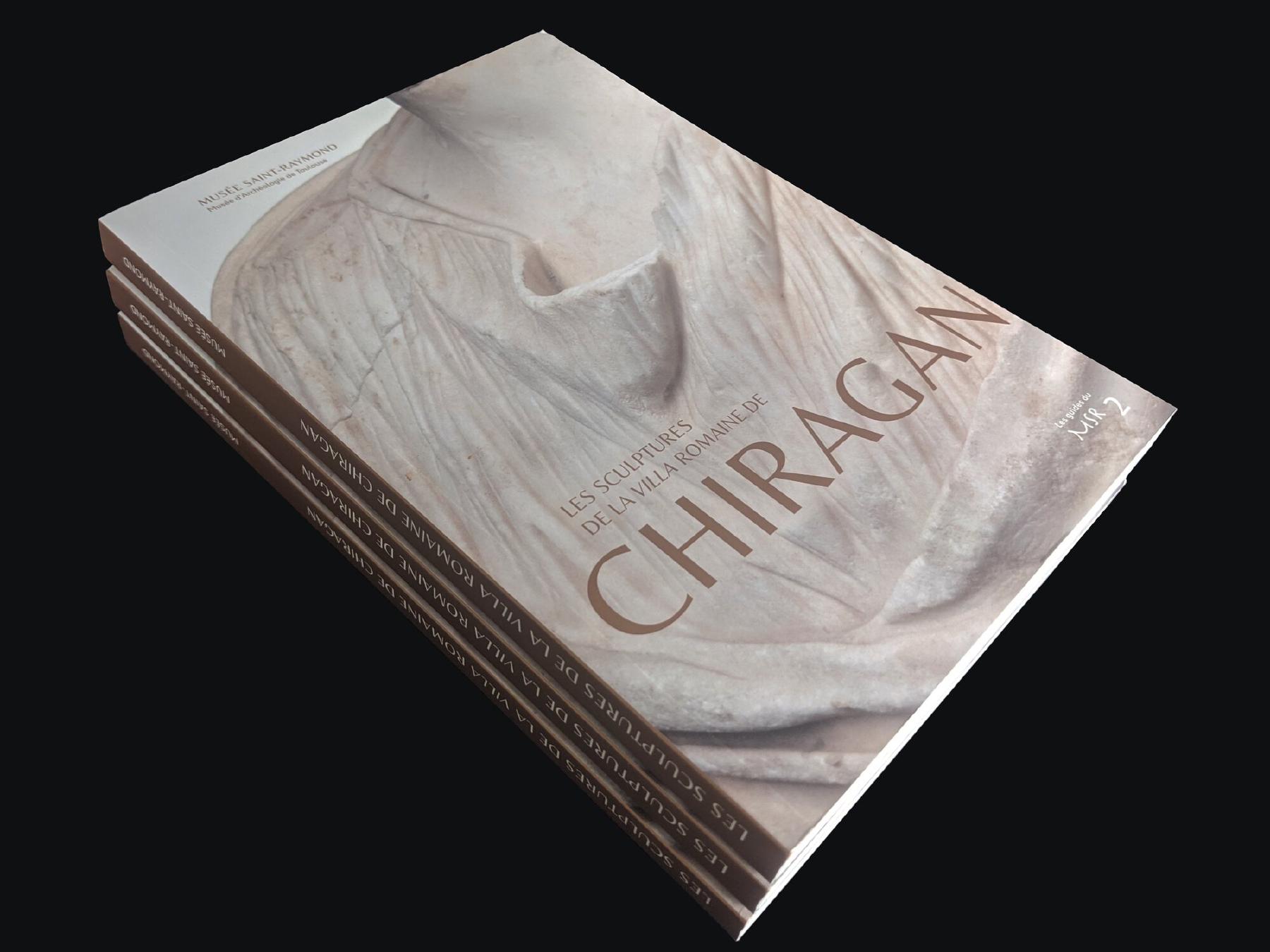
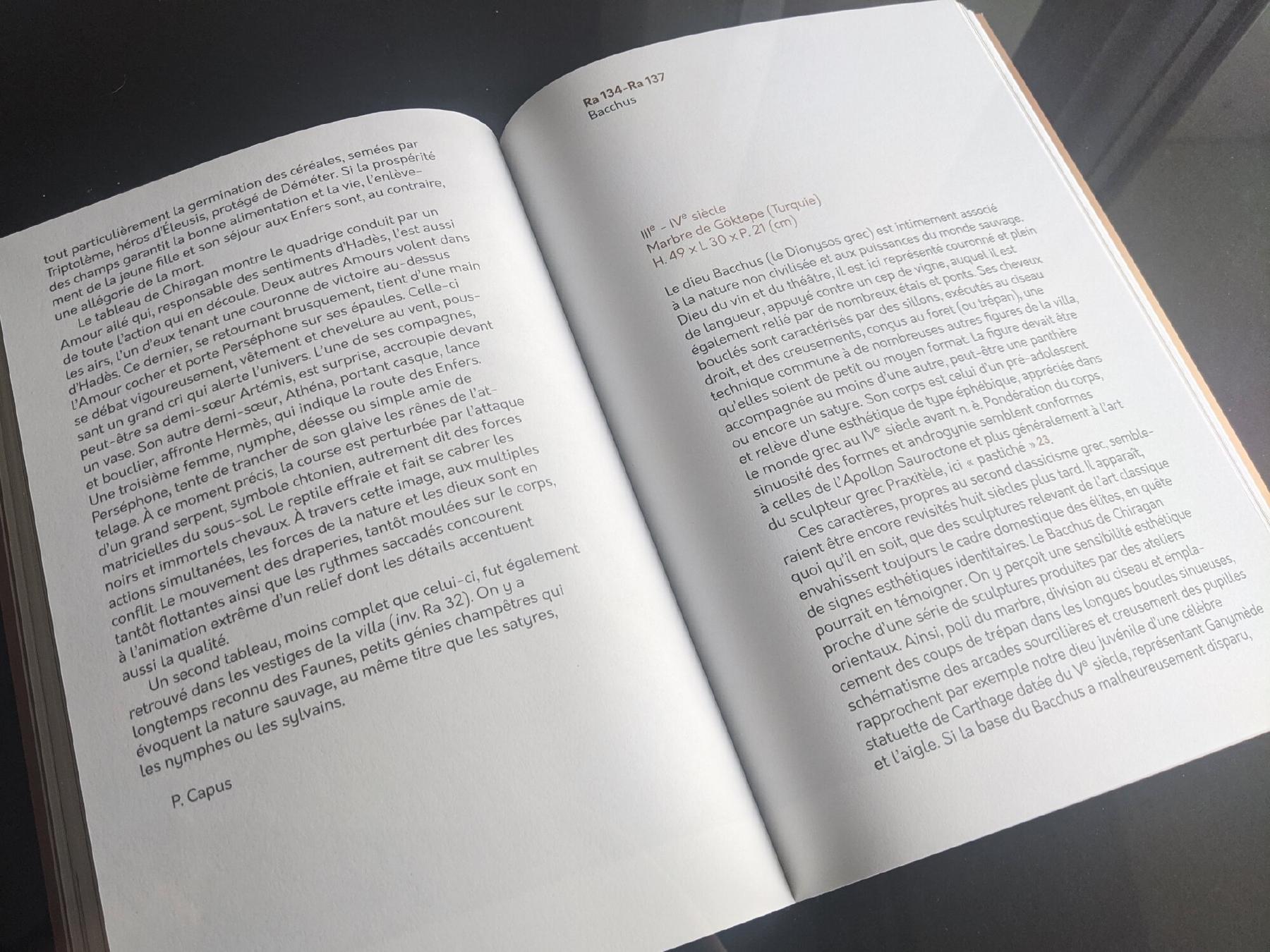
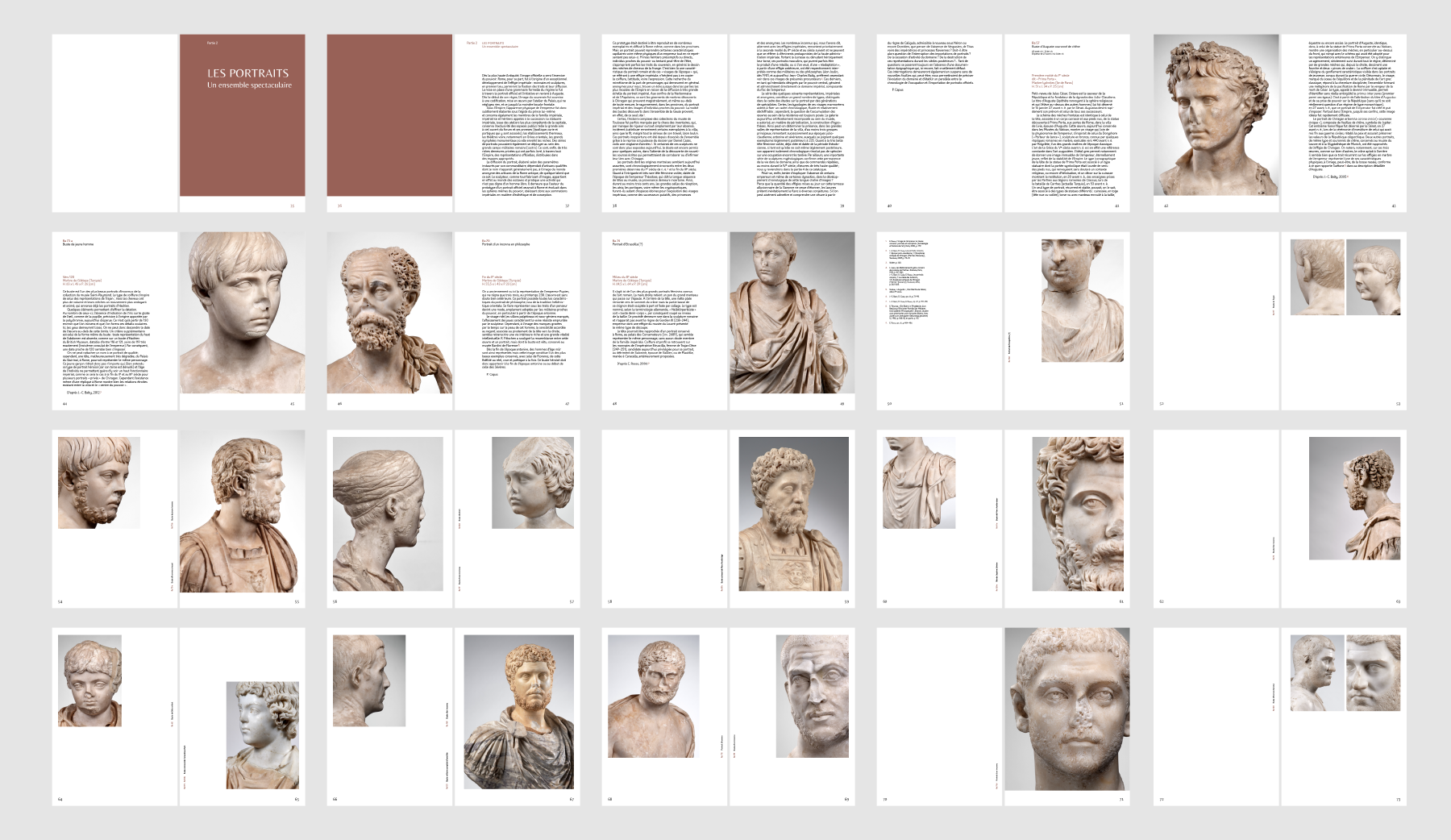
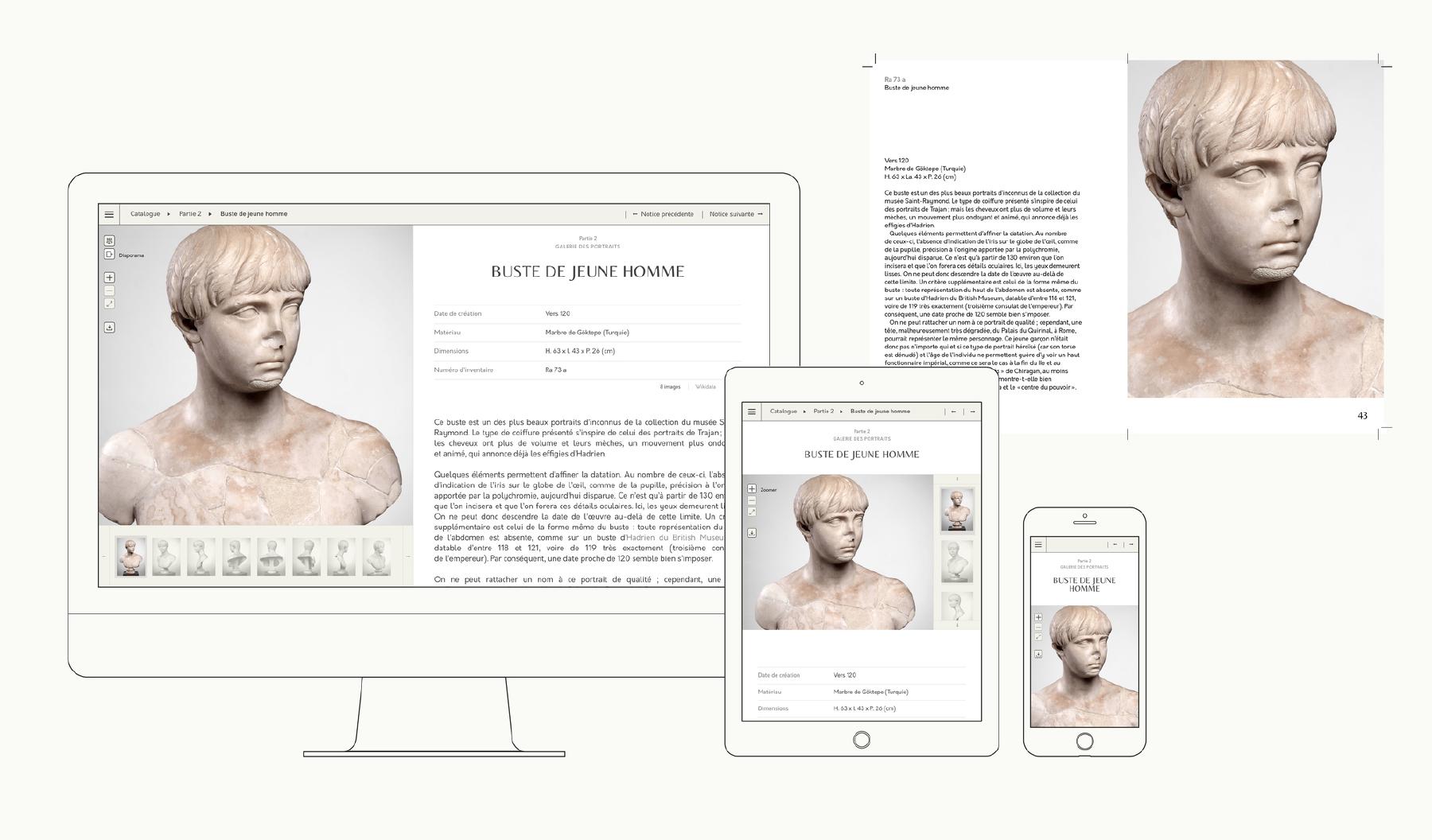
The catalog Les sculptures de la villa romaine de Chiragan (Sculptures from the Roman Villa of Chiragan), developed for the Musée Saint-Raymond, combines scientific research with editorial experimentation based on web technologies 1. The museum holds more than 700 sculpted fragments discovered in Chiragan (Martres-Tolosane), around a hundred of which are on display. While previous research focused mainly on specific groups of works, this catalog offers a broader view, including works that have never been studied before. Structured in four parts (context and reconstruction of the villa, imperial and anonymous portraits, mythological sculpture, and late decorative works), it combines scientific texts, detailed descriptions, complete bibliographies, and comparative images. A dedicated photographic campaign offers high-definition visuals, some of which can be manipulated in 360°. 2
Its multi-media publishing chain, inspired by the Getty Museum, was designed by Julie Blanc and Antoine Fauchié. The system allows for the simultaneous production of a digital version and a printed version from a single source, known as single source publishing.
This architecture is based on open web standards (HTML, CSS, JavaScript) and a combination of interoperable open source tools: Jekyll for generating the static site, Paged.js for print layout from the browser, Git and GitLab for collaborative versioning, Zotero for managing bibliographic references, and Forestry.io as a graphical editorial interface for the museum team. 3
The content, written in Markdown and then converted to HTML, is entered once and adapted for both web and print; the PDF is generated from the browser via Paged.js. The texts and images are distributed under a Creative Commons BY-SA license, in accordance with the City of Toulouse’s open data policy. 4
The structure of this project is based on the principles of interoperability, modularity, and multiformity. Thanks to Git, all stakeholders work on the same source files, with changes automatically reflected on both media, thus constituting an open, collaborative, and reproducible editorial model. 5
- web.2print.org ↩
- Huber Marie, Digital catalog The sculptures of the Roman villa of Chiragan, Museum mediation platforms. ↩
- Blanc Julie, A collaborative, multi-platform publishing chain for the Saint-Raymond Museum, 2020. ↩
- Huber Marie, Digital catalog Les sculptures de la villa romaine de Chiragan, Plateformes des médiations muséales. ↩
- Blanc Julie, A collaborative and multi-media publication chain for the Saint-Raymond Museum, 2020. ↩
Infos
Type
Catalogue de musée
Author(s)
Laure Barthet (Directrice), Pascal Capus, Chloé Damay, Emmanuel Rosso, Daniel
Designer(s)
Julie Blanc et Antoine Fauchié
Publisher
Le musée Saint-Raymond, musée d'archéologie de Toulouse
Printing
CMJN + Pantone 876U
Pages
168
Binding
dos carré-collé cousu
Size
165 × 235 mm
Technologies
Jekyll / CSS / Paged.js
Year
2020
Copies
2000
Language
French
Sitography
Christelle Moliné: editorial coordination
Pascal Capus: catalogue copywriting
Antoine Fauchié: toolchain design
Julie Blanc: graphic design and web development
Antoine Fauchié: toolchain design
Julie Blanc: graphic design and web development
Antoine Fauchié: toolchain design
Julie Blanc: graphic design and web development
Ménard Imprimerie, Labège
Markdown
Zotero
Forestry.io
Jekyll
HTML
Git (GitLab)
Jekyll
HTML
CSS
Paged.js
Chrome
Chrome
Netlify
Offset printing CMYK and Pantone (876U)
Writing
Bibliography in Zotero
Text markup
Markdown files converted into structured and organised HTML files: several HTML files are produced for the website and one HTML file is produced for the printed catalogue, using reduced content. The files are converted using the Jekyll static site generator.
CSS and Paged.js layout for the printed version and for the web version
Exporting the PDF in RGB from the browser
Preparing the files for printing => this was done by the printer + photoengraver who created the Pantone images + replaced the CMYK images
Print run of 2,000 copies
Sewn perfect binding
Website hosting on Netlify
Markdown text in Github repository: https://gitlab.com/musee-saint-raymond/villa-chiragan/-/tree/master/en_EN/_contenus
HTML files for the website
An HTML file with all the content for the printed version
A GitLab repository for managing the project with others
Responsive website
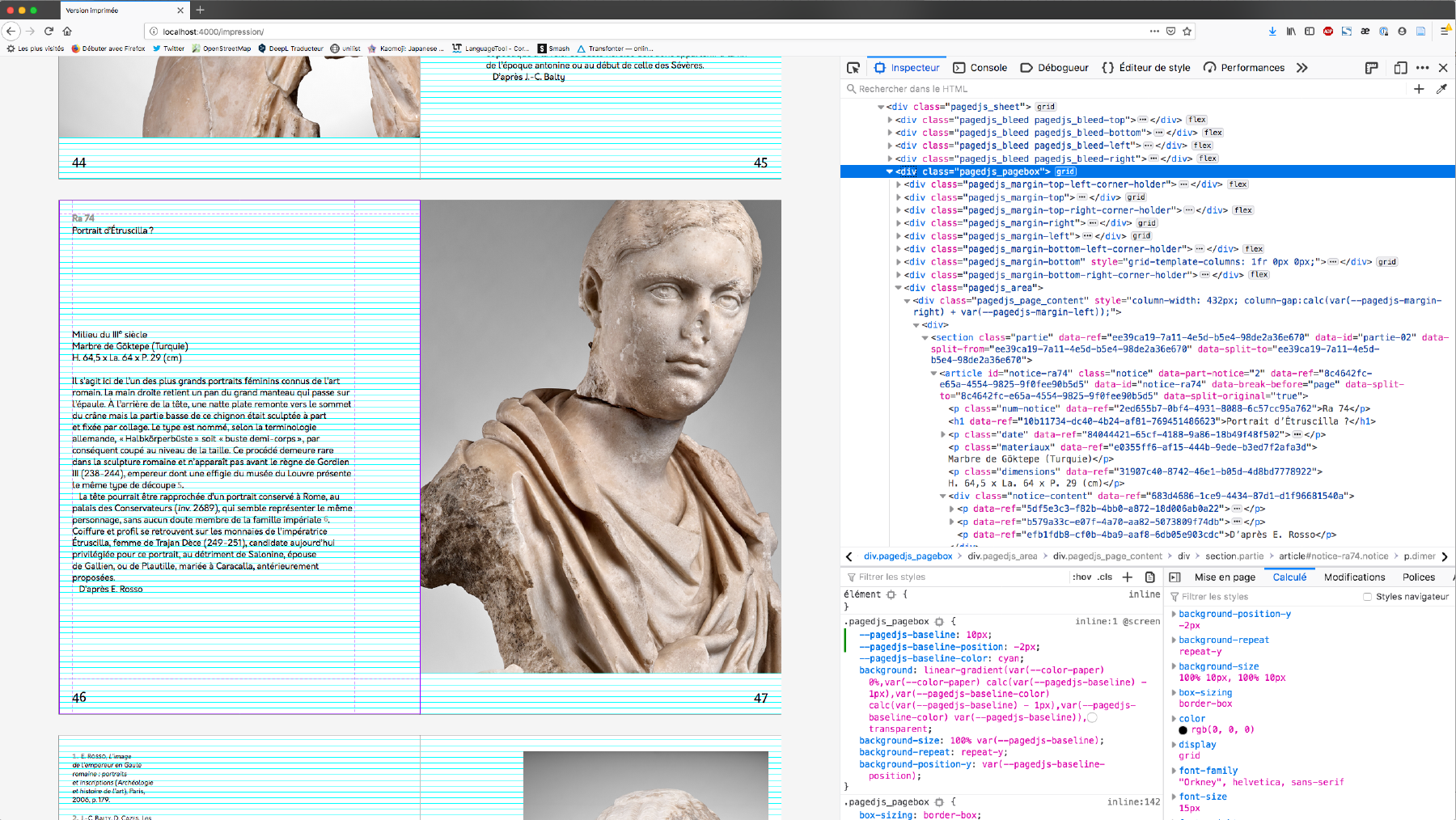
Preview of the printed book in the browser using Paged.js
Responsive website
Ready to Print PDF CMYK + Pantone
Responsive website online
Print edition with different content: more content on the website than in the print edition
Jekyll was chosen because it allowed us to work with Zotero.
Use of scripts:
Jekyll microtypo to improve microtypography
Jekyll scholar: Jekyll plugin to manage the display of bibliographic citations and bibliographies
Better BibTeX: Zotero plugin to generate bibliography exports
Page reorganisation script for full-page images
The author found it incredible to see the website take shape at the same time as he was writing.
Collecting data
Christelle Moliné: editorial coordination
Pascal Capus: catalogue copywriting
Markdown
Zotero
Writing
Bibliography in Zotero
Text markup
Markdown text in Github repository: https://gitlab.com/musee-saint-raymond/villa-chiragan/-/tree/master/en_EN/_contenus
Transforming data
Antoine Fauchié: toolchain design
Julie Blanc: graphic design and web development
Forestry.io
Jekyll
HTML
Git (GitLab)
Markdown files converted into structured and organised HTML files: several HTML files are produced for the website and one HTML file is produced for the printed catalogue, using reduced content. The files are converted using the Jekyll static site generator.
HTML files for the website
An HTML file with all the content for the printed version
A GitLab repository for managing the project with others
Jekyll was chosen because it allowed us to work with Zotero.
Layout
Antoine Fauchié: toolchain design
Julie Blanc: graphic design and web development
Jekyll
HTML
CSS
Paged.js
Chrome
CSS and Paged.js layout for the printed version and for the web version
Responsive website
Preview of the printed book in the browser using Paged.js
Use of scripts:
Jekyll microtypo to improve microtypography
Jekyll scholar: Jekyll plugin to manage the display of bibliographic citations and bibliographies
Better BibTeX: Zotero plugin to generate bibliography exports
Page reorganisation script for full-page images
Exporting
Antoine Fauchié: toolchain design
Julie Blanc: graphic design and web development
Chrome
Exporting the PDF in RGB from the browser
Preparing the files for printing => this was done by the printer + photoengraver who created the Pantone images + replaced the CMYK images
Responsive website
Ready to Print PDF CMYK + Pantone
Printing
Ménard Imprimerie, Labège
Netlify
Offset printing CMYK and Pantone (876U)
Print run of 2,000 copies
Sewn perfect binding
Website hosting on Netlify
Responsive website online
Print edition with different content: more content on the website than in the print edition
The author found it incredible to see the website take shape at the same time as he was writing.
